When you build a custom horse trailer, a heavy equipment hauler, or a low-profile car carrier, off-the-shelf axles rarely fit your needs. You need a solution that matches your exact frame, loading requirements, and road conditions. However, ordering custom trailer axles from a manufacturer demands precise measurements. A single misstep in your specs can lead to tire rub, frame stress, uneven wear, or even a dangerous axle failure on the highway.
At Weifang Top Trailer Accessories, we help fleet builders and trailer manufacturers worldwide get their specifications right the first time. In this guide, you will learn how to measure the three critical dimensions that determine whether your custom axle fits perfectly or fails prematurely.
1. Track Length: Hub Face to Hub Face
The track length defines the overall width of your axle assembly. Notably, many builders confuse this measurement with the overall trailer width, but they differ significantly.
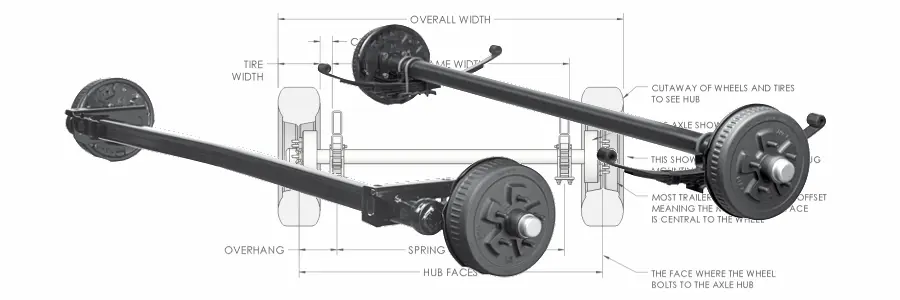
How to measure it: You measure the distance from the wheel mounting surface of one hub to the wheel mounting surface of the opposite hub — the flat face where the wheel rim seats against the hub. Do not measure to the end of the spindle or to the dust cap. Both mistakes produce incorrect numbers that waste time and money.
Why it matters: If you specify a track length too short, your tires will rub against the trailer frame or wheel wells during cornering. On the other hand, if you make it too wide, you may exceed legal width limits or create excessive leverage on the axle spindles. Furthermore, an incorrect track length forces your tires to run at an angle, which accelerates tread wear dramatically.
Pro tip: Start with your desired overall trailer width, then subtract the tire offset on both sides. This simple calculation gives you the ideal hub-face-to-hub-face dimension. For example, if your target trailer width is 96 inches and each tire adds 8 inches of offset, your track length comes out to 80 inches.
Once you settle on your track length, you also need to consider the axle type. Read our guide on Straight vs. Drop Axles: Which Design is Best for Your Utility Trailer? to decide which beam profile suits your build.
2. Spring Center Distance
Spring center distance determines exactly where your axle mounts to the trailer’s suspension system. Consequently, this measurement directly affects how your trailer tracks down the road.
How to measure it: Measure from the center of one spring seat — the mounting pad on the axle beam — to the center of the other. If you replace an existing axle, measure center-bolt to center-bolt on the old axle beam. If you build from scratch, measure the distance between the center of your spring hangers already attached to the trailer frame.
Why it matters: Even a half-inch discrepancy forces the leaf springs into an angled position. As a result, this misalignment causes your trailer to “dog-track” — a condition where the trailer pulls slightly to one side behind your tow vehicle. Dog-tracking not only increases fuel consumption but also wears your tires unevenly and creates a safety hazard during lane changes.
Additionally, your spring center distance works hand-in-hand with proper alignment geometry. For a deeper dive into how alignment affects your trailer’s performance, check out our post on The Importance of Axle Alignment: How to Save Your Tires and Fuel.
3. Spindle Specifications and Load Rating
The spindle carries the entire load of your trailer and transfers it to the wheels. Getting spindle specs right is critical for safety and long-term durability.
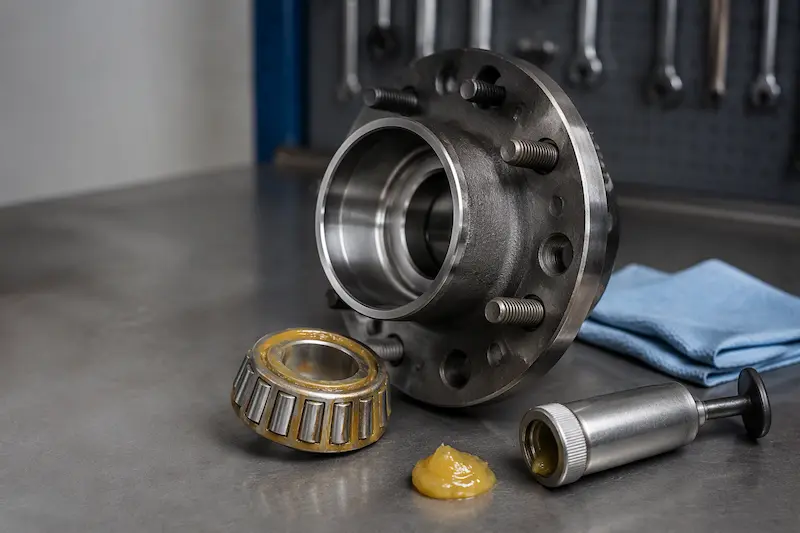
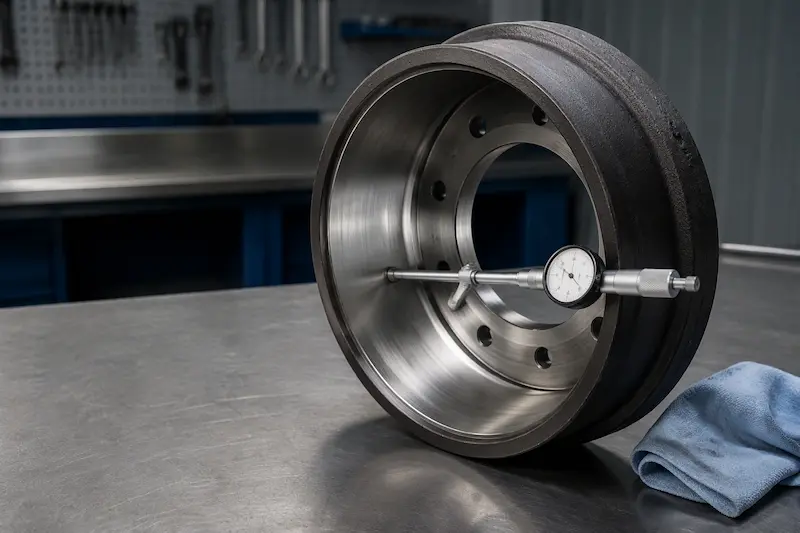
Bearing and hub compatibility: You must specify the inner and outer bearing diameters as well as the bolt pattern — for example, 5-on-4.5 or 6-on-5.5. These dimensions ensure your existing brake drums, hubs, and wheels fit the new spindle without modification. Above all, always match the bolt pattern to your wheel inventory. Mixing patterns across a fleet creates logistical headaches and unnecessary parts inventory.
Load capacity (GAWR): The Gross Axle Weight Rating tells your manufacturer exactly how much weight the axle must support. Under-specifying this number leads to bent spindles and catastrophic bearing failure. In contrast, over-specifying adds unnecessary cost and weight. Calculate your GAWR by adding the trailer’s dry weight, maximum cargo weight, and a 15% safety margin. Most manufacturers, including our team at Weifang Top, recommend referencing SAE J2530 for standard trailer axle performance requirements.
Camber requirements: Many heavy-duty axles require a built-in camber — a slight upward bend in the beam. This curvature ensures the wheels sit flat on the road when you fully load the trailer. Without it, heavy loads push the wheels into a negative camber, which chews through tires rapidly. Learn more in our article on Understanding Axle Camber and Toe: How Manufacturing Tolerances Impact Tire Life.
4. The “Measure Twice, Order Once” Checklist
Before you send your order to our engineering team, verify these three additional details:
- Axle beam type: Do you need a round tube or a square beam? Square beams offer more surface area for welding specialized brackets and accessories — a common choice for custom builds.
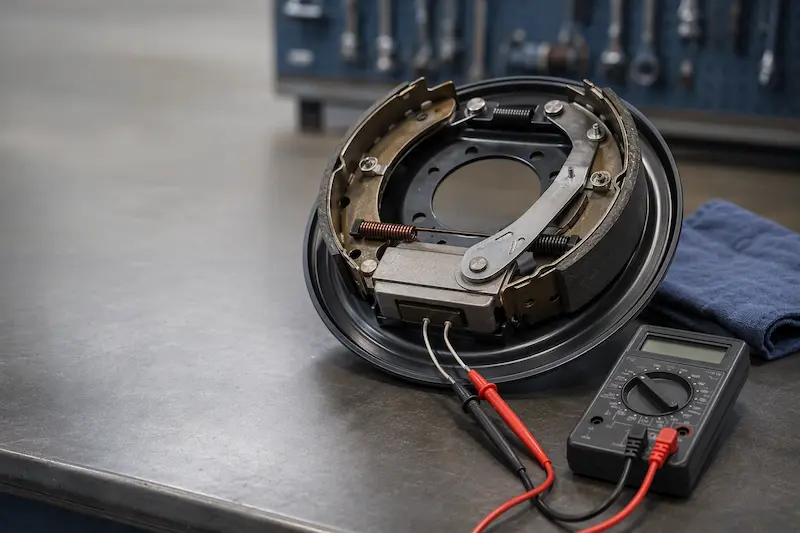
- Brake flange pattern: Specify a 4-bolt or 5-bolt flange for your electric brake assemblies. This detail must match your backing plate exactly.
- Spindle finish: If you operate your trailer near saltwater or road salt, request corrosion-resistant spindle treatments. Standard spindles work well for inland use, but coastal environments demand extra protection.
FAQ: Custom Trailer Axle Specifications
Q: Can I use a standard axle on a custom trailer build? A: You can, but only if your frame width and load requirements happen to match standard dimensions. For specialized hauling — livestock trailers, equipment haulers, boat trailers — custom axles deliver a precise fit and better handling. Check out our OEM/ODM solutions page for more details on the customization options we offer.
Q: How do I know if my spring center measurement is correct? A: Measure three times: once on the trailer frame, once on the old axle (if replacing), and once more to confirm. If these numbers disagree, trust the frame measurement. The axle must match the frame, not the worn-out component you replace.
Q: What happens if I specify the wrong track length? A: A track length error causes tire rub against the chassis, illegal trailer width, or stress on the spindle bearings. In the worst case, it can lead to a wheel detachment. Always double-check this measurement before you submit your order.
Q: Do you manufacture custom axles for small batch orders? A: Yes, we do. At Weifang Top, we accept both large-volume production runs and small-batch custom orders. Our stamping and machining workshops handle flexible quantities while maintaining consistent quality across every run.
Q: What axle material works best for saltwater environments? A: Hot-dip galvanized steel axles offer the best protection against saltwater corrosion. For boat trailers that launch in Australia or New Zealand, we strongly recommend galvanized beams and stainless steel hardware. Standard painted axles degrade quickly in marine conditions.
Q: How long does a custom axle order take from specification to delivery? A: Lead times depend on order volume and complexity. Most custom orders ship within 3 to 6 weeks. Our location near Qingdao Port ensures efficient sea freight to North America, Australia, and New Zealand. Contact our sales team for a precise timeline based on your specifications.
Q: What certifications do your axles meet? A: Our axles comply with DOT and SAE standards for the North American market. We also meet relevant Australian Design Rules (ADR) for the Australian and New Zealand markets. All products undergo thorough QC inspection by our 15 quality control specialists before shipment.
Why Choose Weifang Top for Your Custom Trailer Axles?
Since 2015, Weifang Top Trailer Accessories has supplied precision-engineered axles and brake components to the United States, Canada, Australia, and New Zealand. Our team of 10 professional engineers provides technical guidance throughout the specification process — we do not just manufacture parts; we help you get the design right. Moreover, with 15 dedicated QC inspectors and two specialized production workshops, we deliver consistent quality whether you order 10 axles or 10,000.
Ready to specify your custom trailer axles? Send us your measurements today, and our engineering team will review your specifications and provide a tailored quote within 24 hours.