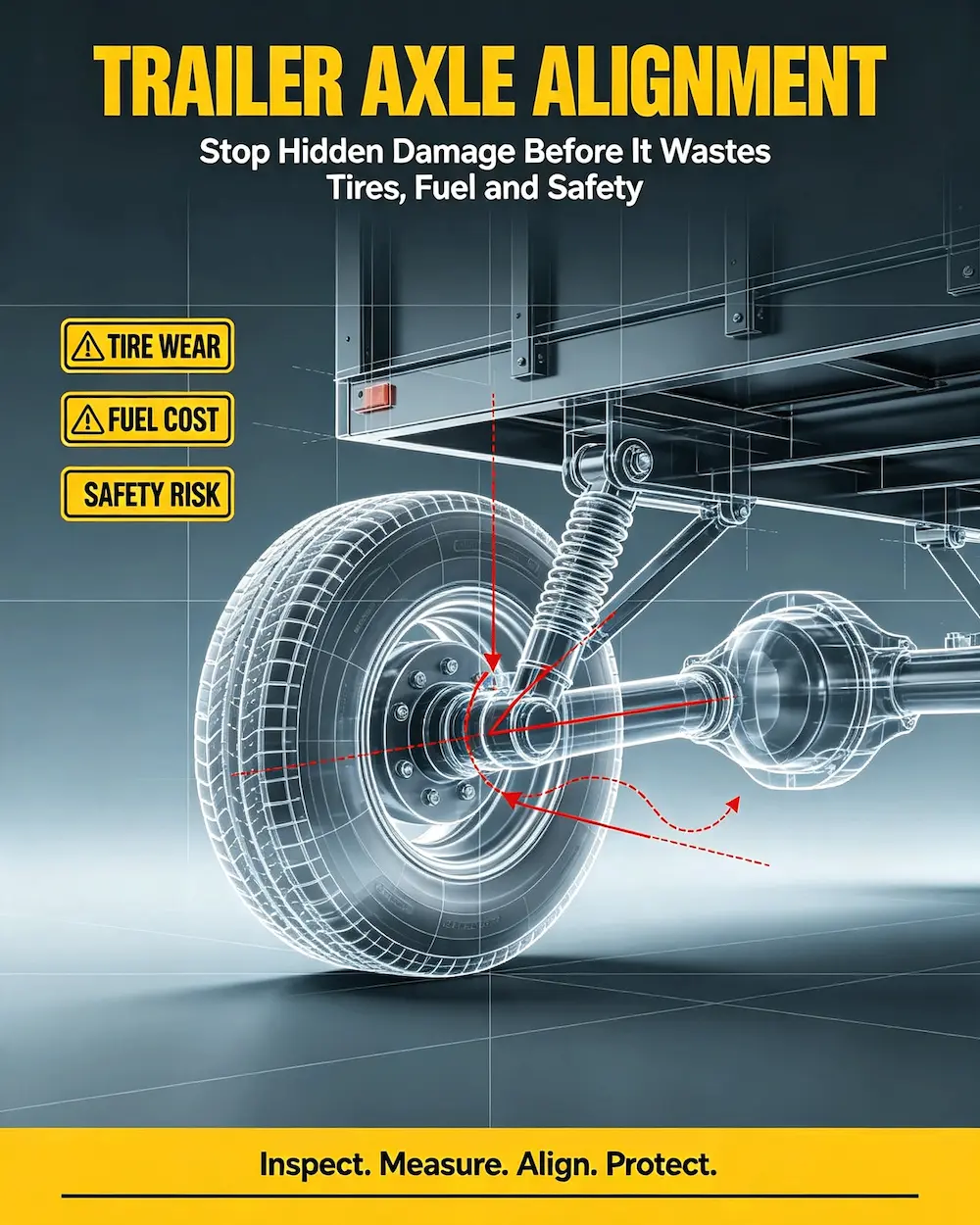
Axle alignment is one of the most overlooked aspects of trailer maintenance. Many owners focus on tire pressure and bearing grease but ignore the geometry that holds everything together. The reality is stark: a misaligned axle silently destroys your tires, drains your fuel budget, and creates a genuine safety hazard on the highway.
At Top Axles, we have seen the damage a single misaligned axle can cause—and we know how to fix it. This guide explains how misalignment happens, how to spot it, and what corrective actions to take.
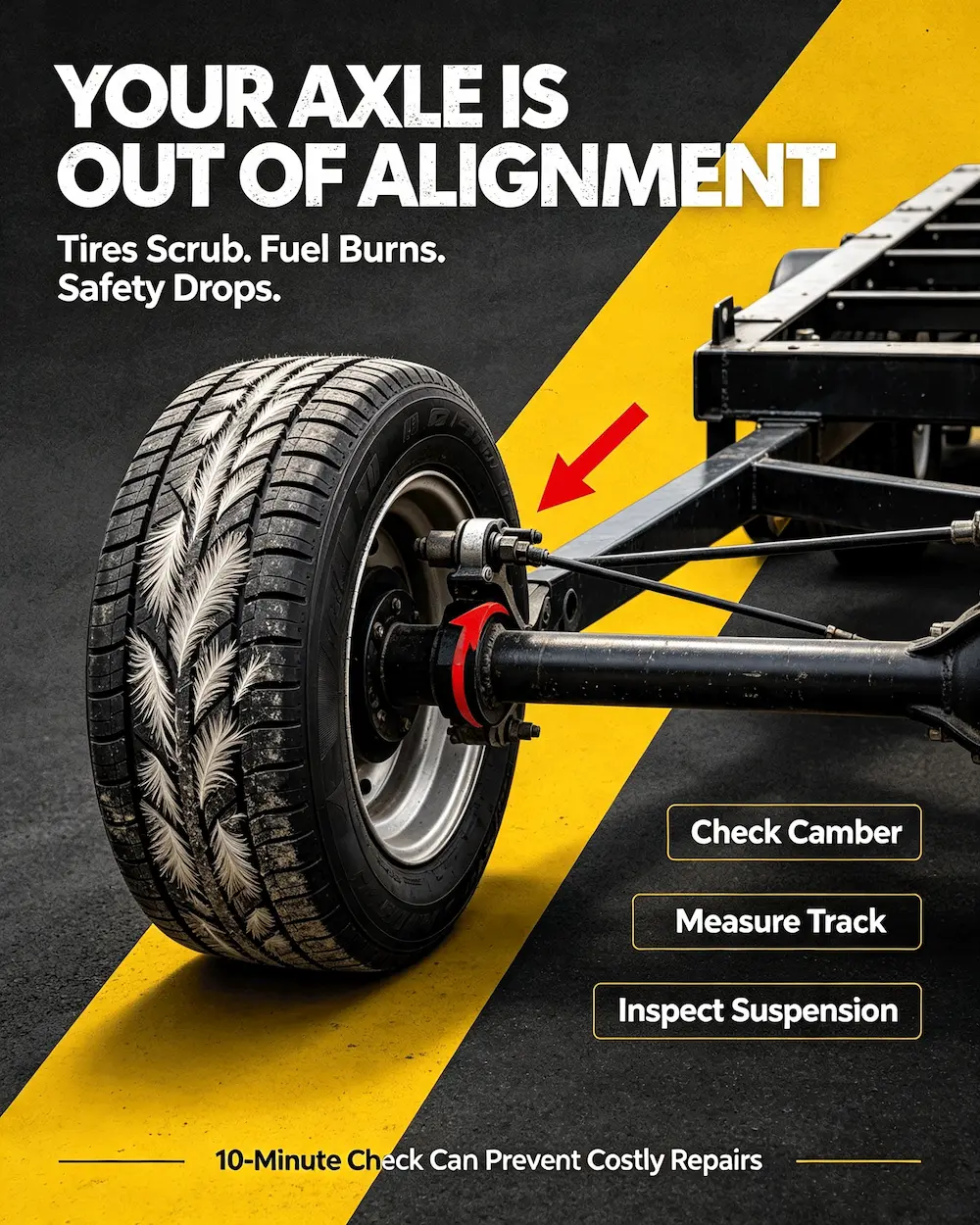
1. How Axle Misalignment Happens
Axle misalignment does not occur overnight. It develops gradually through a combination of mechanical wear and external impacts. Understanding the root causes is the first step toward prevention.
Common Causes:
-
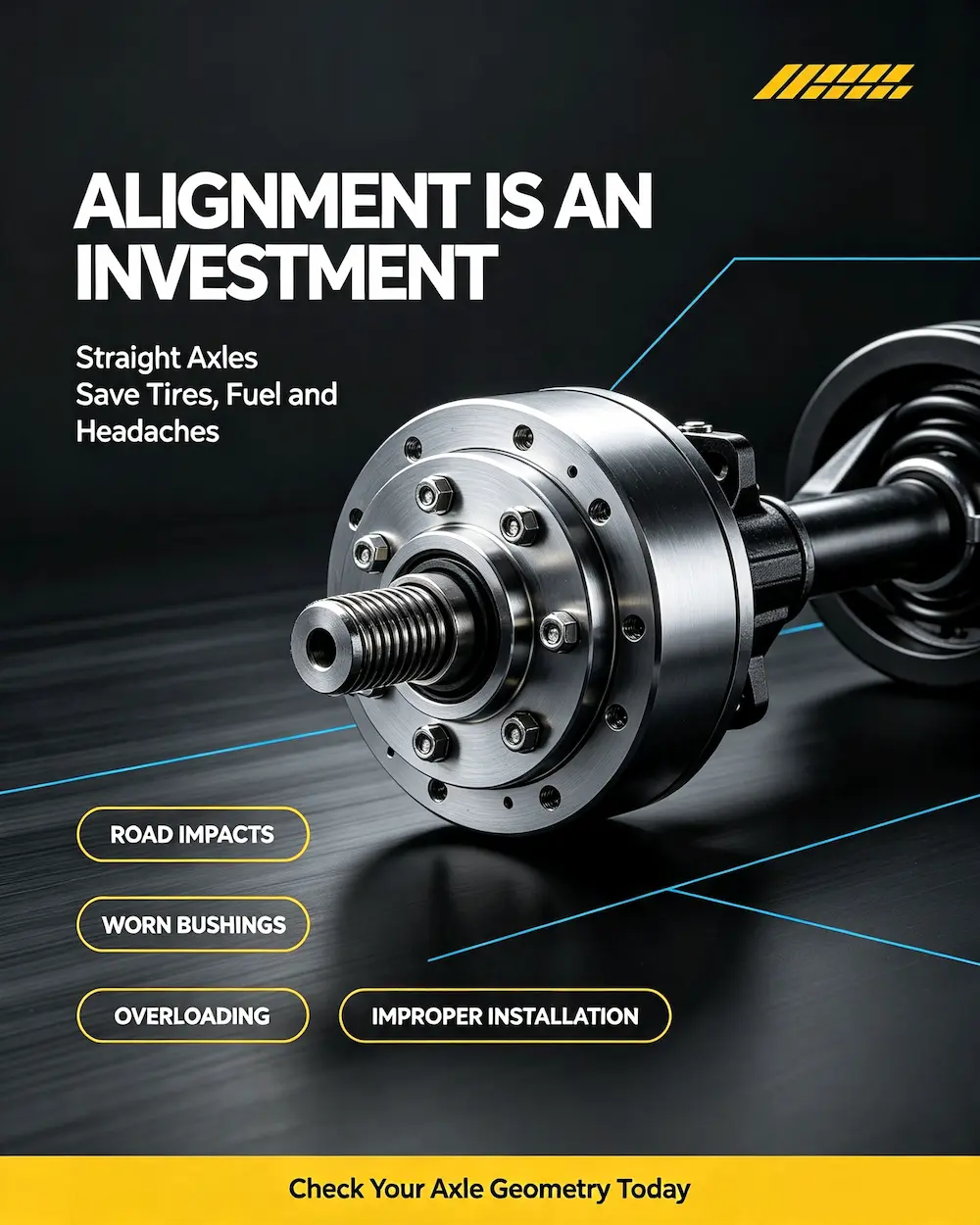
Road Impacts: Hitting a deep pothole, running over a curb, or striking a road debris can bend an axle beam or shift its mounting position on the leaf springs in a fraction of a second.
-
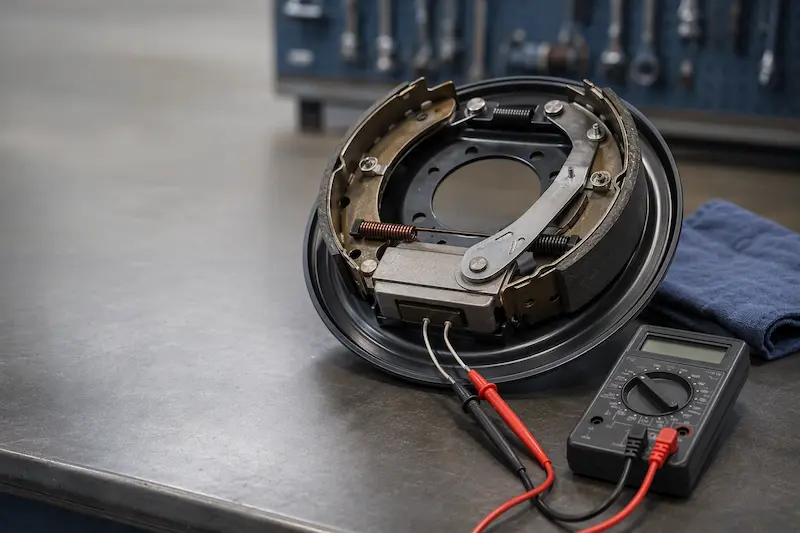
Worn Suspension Components: Leaf spring bushings, equalizers, and spring hangers degrade over time. When these parts wear unevenly, the axle shifts out of its intended orientation relative to the trailer frame. For trailers utilizing our precision-stamped brake components, any misalignment can further accelerate uneven brake shoe wear.
-
Overloading: Exceeding an axle’s rated capacity causes the axle tube to flex. Repeated overloading leads to permanent deformation—a condition commonly referred to as a “bent axle.” The axle no longer returns to its original camber when unloaded.
-
Improper Installation: If an axle was mounted with incorrect spring center measurements or misaligned spring seats during the initial build, it will run crooked from day one. Even a 1/8-inch deviation at the mounting point translates into significant tracking error over the trailer’s length.
2. The Cost of Misalignment: Three Critical Consequences
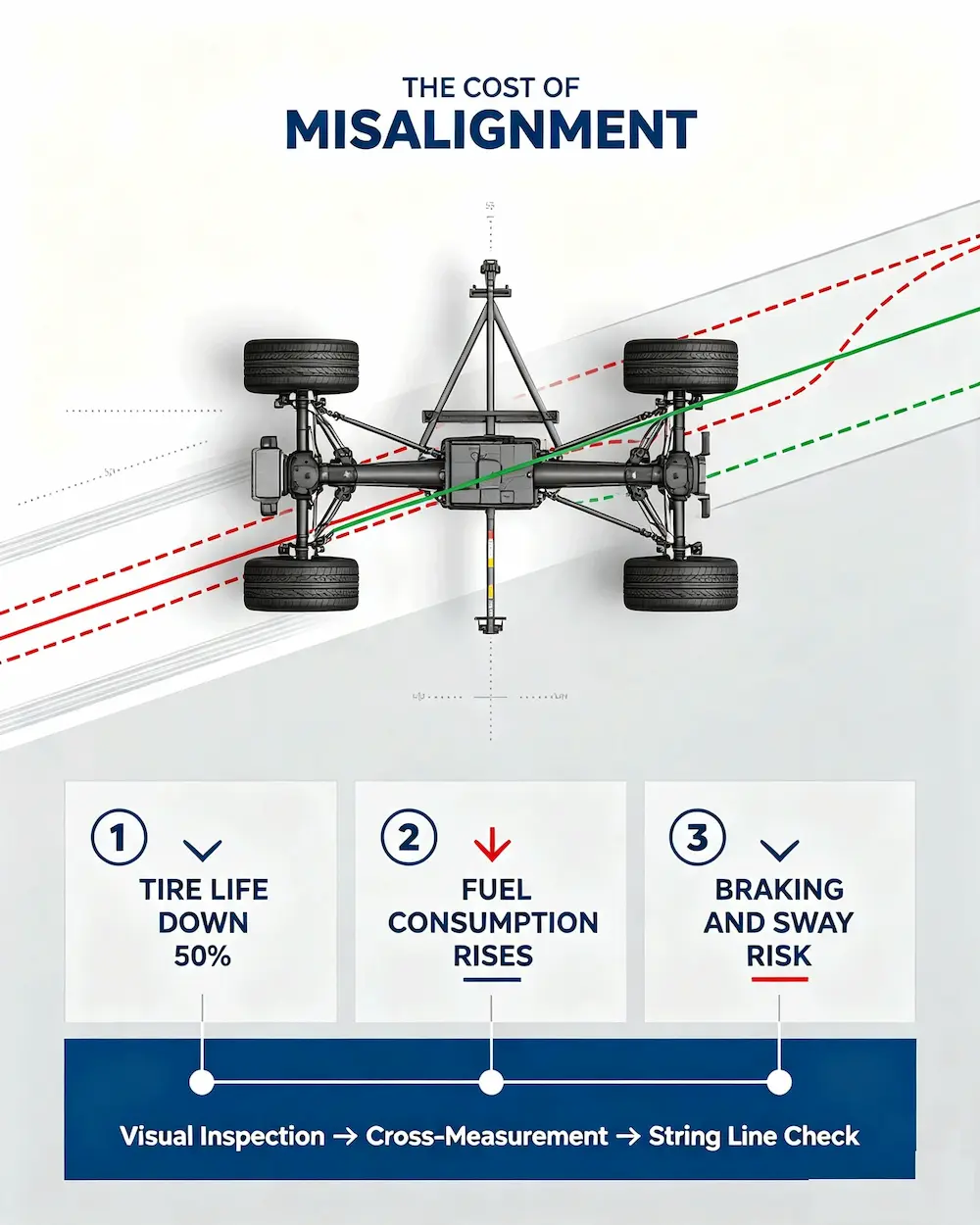
Misalignment is not just a “minor annoyance”—it extracts a measurable financial cost every mile you tow.
a) Accelerated Tire Wear (The Most Visible Symptom)
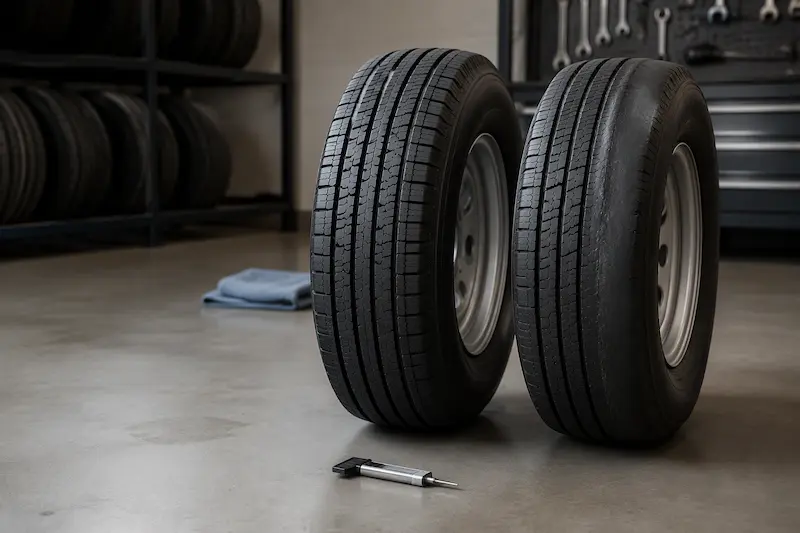
When an axle is misaligned, the tires are dragged across the pavement at a slight angle rather than rolling freely. This creates a “scrubbing” action that wears down the tread at an alarming rate. According to industry data from Tire Review, improper alignment can reduce tire life by as much as 50%.
What to look for:
- “Feathering” or “cupping” on the inner or outer tread edge.
- One tire wearing noticeably faster than the other on the same axle.
- Diagonal wear patterns across the tread blocks.
b) Increased Rolling Resistance and Fuel Penalty
Tires that are scrubbing sideways do not roll efficiently. The engine must work harder to overcome the additional friction, directly increasing fuel consumption. Fleet operators running multiple misaligned trailers can see a noticeable dip in miles per gallon—wasting hundreds of dollars in fuel over a single season.
c) Compromised Braking and Sway
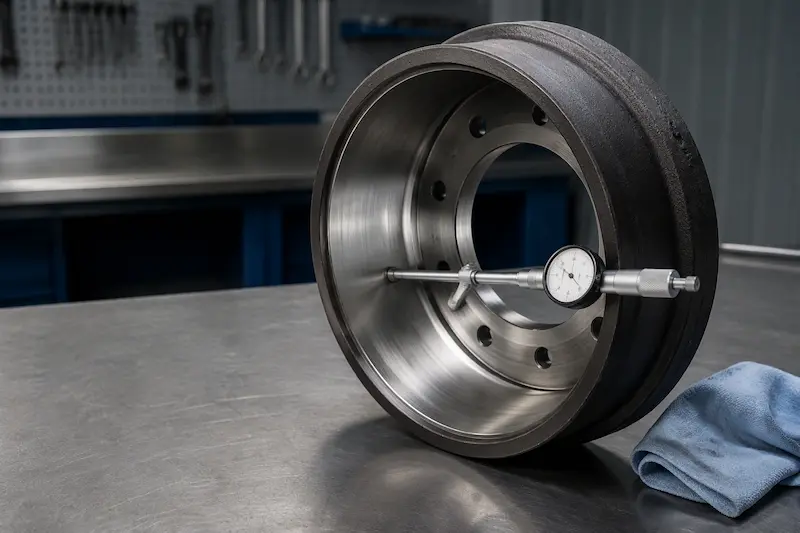
Misalignment affects more than fuel and tires—it impacts safety. A trailer with a crooked axle does not track squarely behind the tow vehicle. During hard braking, the misaligned wheels can pull the trailer to one side, increasing the risk of jackknifing. Additionally, the constant side-load stresses the brake drums and assemblies, causing uneven shoe-to-drum contact and unpredictable stopping distances.
3. How to Diagnose Misalignment: A Step-by-Step Guide
You do not always need a laser alignment rack to detect a problem. Here are three field-diagnostic techniques:
Method 1: The Visual Inspection
Park the trailer on level ground. Stand directly behind it and sight along the wheels. Do the tires appear to lean inward or outward (camber issue)? Does one wheel sit visibly further forward or backward than the other (toe or thrust angle issue)?
Method 2: The Cross-Measurement Technique
Using a tape measure, measure the distance from the center of the hitch coupler to the center of the left wheel. Repeat for the right wheel. These two measurements should be identical within 1/8 inch (3 mm). If they differ, the axle is not perpendicular to the frame.
Method 3: The String Line Method
Stretch a string line along each side of the trailer, positioned just off the tire sidewalls. The distance from the string to the front and rear of each tire should be consistent. This reveals toe issues where the axle is “pigeon-toed” or “duck-footed.”
4. How to Fix Axle Alignment
The corrective action depends on the severity and root cause:
Minor Adjustment: Axle Repositioning
If the axle has simply shifted on the leaf springs (common after a hard pot-hole impact), you can often correct it by:
- Loosening the U-bolts that clamp the axle to the springs.
- Using a hydraulic port-a-power or heavy ratchet strap to realign the axle.
- Re-tightening the U-bolts to manufacturer torque specifications.
Worn Components: Bushing and Hanger Replacement
If the bushings in the leaf spring eyes or equalizer are collapsed, the axle will shift under every bump. Replacing these with fresh polyurethane or rubber bushings—available through our component catalog—restores proper geometry.
Severe Damage: Axle Replacement
A bent axle tube cannot be reliably straightened. Once the beam has permanently deformed, replacement is the only safe option. Continuing to tow on a bent axle risks catastrophic separation of the spindle from the tube. At Top Axles, we manufacture OEM-spec replacement axles with precise spindle alignment, ensuring your new axle bolts in with perfect tracking geometry.
5. Prevention: Keeping Your Axles Straight
Prevention is always cheaper than repair. Follow these best practices:
- Respect weight ratings: Never exceed the GAWR (Gross Axle Weight Rating). Check your trailer’s load before every trip.
- Inspect suspension annually: Replace cracked bushings, loose U-bolts, and corroded spring hangers before they cause the axle to drift.
- Slow down on rough roads: Reducing speed over potholes and railroad tracks dramatically reduces impact forces transmitted through the suspension to the axle beam.
For additional guidance on trailer braking safety and maintenance best practices, consult resources like the National Association of Trailer Manufacturers (NATM) for industry standards and safety guidelines.
Conclusion: Alignment is an Investment, Not an Expense
Axle alignment saves you money every single mile—through longer tire life, lower fuel consumption, and fewer roadside emergencies. A simple cross-measurement check takes ten minutes and can reveal problems that would otherwise cost hundreds of dollars in preventable damage.
At Top Axles, we provide precision-engineered axles, brake assemblies, and suspension components to keep your trailer tracking straight and towing safely. Whether you need a replacement axle or technical guidance on realignment, our engineering team is ready to support you.
Is your trailer pulling to one side? Contact our Technical Support Team for diagnostic assistance or Browse our Axle and Component Catalog.