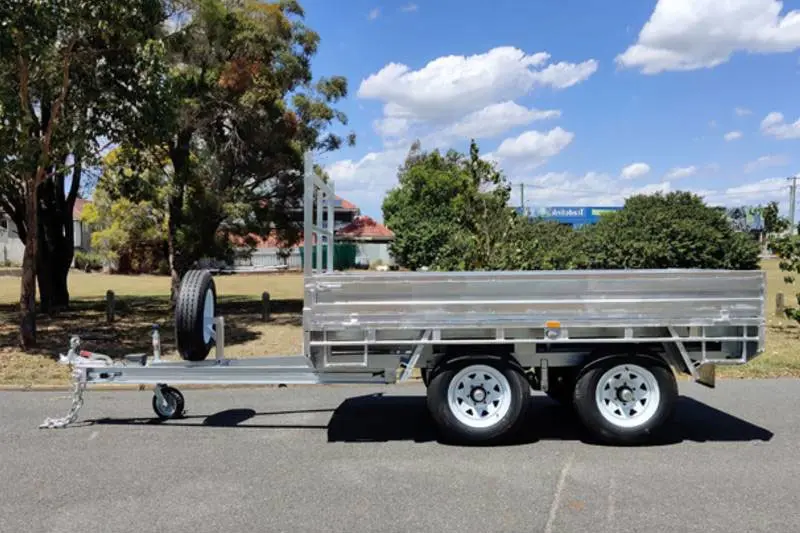
Whether you are hauling lawn equipment, moving furniture, or transporting building materials, your utility trailer’s axle configuration directly determines how easy it is to load and how stable it rides. Two fundamental designs dominate the market: Straight Axles and Drop Axles. While they both serve the same core function—supporting weight and enabling wheel rotation—their shapes dictate entirely different loading characteristics.
At Top Axles, we help customers worldwide choose the right configuration for their specific needs. Here is a technical breakdown of how axle shape affects ride height and loading ease.
1. Understanding the Two Designs
Straight Axles
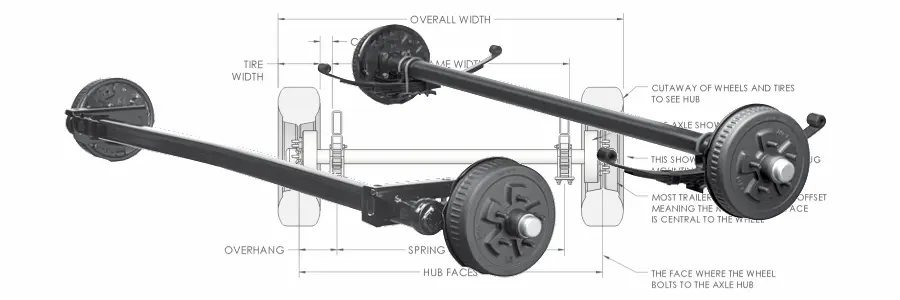
A straight axle features a single, continuous beam that runs directly from one wheel hub to the other. The spindle is in line with the main axle tube, meaning the axle sits at the same height as the wheel center.
Drop Axles
A drop axle incorporates a vertical “step” or offset near each end. The center section of the axle sits higher than the spindle ends. This creates a lower trailer deck height without reducing ground clearance at the wheels.
2. Ride Height: How High Does Your Trailer Sit?
Ride height—the distance between the ground and the trailer frame—is the most visible difference between these two designs.
-
Straight Axles produce a higher ride height. Because the axle tube sits directly on top of the leaf springs, the trailer frame is elevated. This is ideal for off-road or rough-terrain use where you need maximum ground clearance to avoid scraping rocks or debris.
-
Drop Axles produce a lower ride height. The offset design allows the trailer frame to sit several inches closer to the ground. This lowers the center of gravity, which dramatically improves cornering stability and reduces the risk of trailer sway at highway speeds.
3. Loading Ease: The Critical Factor for Utility Trailers
For utility trailers, the loading experience makes or breaks productivity. This is where axle choice becomes a practical, everyday concern.
Why Drop Axles Excel in Loading:
- Lower Deck Height: A drop axle can reduce the trailer deck height by 3 to 5 inches. That may not sound like much, but it means significantly less lifting when loading heavy items like lawn mowers, ATVs, or pallets of material.
- Shorter Ramp Requirements: A lower deck requires shorter, lighter ramps. This saves weight and makes the loading angle shallower, reducing the risk of equipment tipping backward while driving up.
- Center of Gravity: A lower load bed means your cargo sits closer to the road, making the entire rig more stable during transport.
When Straight Axles Are the Better Choice:
- Off-Road Applications: If you frequently tow over uneven terrain, a higher ride height prevents the trailer frame from bottoming out.
- Existing Fleet Compatibility: If you own multiple trailers and want to standardize parts or tire sizes across your fleet, straight axles often offer more interchangeability with standard components.
4. Comparison at a Glance
5. How to Choose the Right Axle for Your Utility Trailer
Ask yourself these three questions before committing to an axle design:
-
What are you hauling? If you routinely load heavy, wheeled equipment (mowers, carts, motorcycles), a drop axle’s low deck height will save you time and physical strain every single day.
-
Where are you driving? If your routes include construction sites, farm fields, or unmaintained roads, a straight axle’s superior clearance may be worth the trade-off in loading convenience.
-
What is your tow vehicle’s hitch height? Your trailer should sit level when connected. A drop axle may require a higher hitch height, while a straight axle may require a drop hitch. Measure your setup before purchasing.
Conclusion: The Right Axle for the Right Job
There is no universally “best” axle—only the right one for your specific application. Drop axles dominate the utility trailer market because they prioritize what matters most: easy loading and stable towing. Straight axles remain the go-to choice for off-road and high-clearance applications.
At Top Axles, we manufacture both straight and drop axle configurations with customizable spring centers, hub faces, and weight capacities to match your exact trailer specifications. Our engineering team, backed by years of international export experience to the US, Canada, and Australia, is ready to help you spec the perfect axle for your utility trailer build.
Ready to build or upgrade your utility trailer? Explore our Axle Product Range or Contact our Technical Team for a Custom Quote.