The global supply chain for trailer components has transformed over the past decade. While sourcing through local distributors remains a traditional choice for many small trailer builders and dealers, a growing number of buyers now go straight to the factory. In this guide, we walk through what OEM trailer parts actually mean, the concrete benefits of working directly with a Chinese manufacturer, and the risks you need to manage along the way.
What OEM Trailer Parts Mean for Your Business
OEM stands for Original Equipment Manufacturer, and OEM trailer parts are components built to your exact specification — dimensions, materials, load ratings, and finishes — for use in your own trailers or for resale under your brand. Trailer builders, equipment dealers, rental fleets, and online sellers all buy this way.
You have two sourcing paths. A local distributor stocks standard parts and adds a margin for warehousing and handling, but you accept what they carry. A Chinese manufacturer, in contrast, produces to your drawings and ships directly to you. The direct path demands more work on your side — clear specifications, logistics, and inspection — yet it returns far more control. First, let us examine the cost picture, because it drives most buyers to make the switch.
Benefit 1: Lower Unit Costs Without Compromising Quality
When you buy OEM trailer parts directly from a Chinese manufacturer, you remove the distributor’s margin from the equation. As a result, the factory price typically comes in well below the equivalent local wholesale price, and that difference compounds with volume.
However, a low price means nothing without quality. The savings only hold up when the factory runs disciplined quality control. Before you commit, verify that the manufacturer offers samples, dimensional drawings, and inspection reports, and confirm the parts meet the standards that apply in your market. U.S. buyers, for example, should check compliance with the certification and labeling rules in 49 CFR Part 567 and the tire-and-axle requirements of FMVSS No. 120. A supplier that documents compliance saves you expensive rework later.
Benefit 2: Customization Built Around Your Specification
Off-the-shelf parts limit your design. Direct factory sourcing unlocks customization, and that is where OEM trailer parts earn their keep. You can specify the axle rating, spindle size, spring seat spacing, brake flange configuration, or stamping tolerances that your application actually needs — no compromises, no substitute parts.
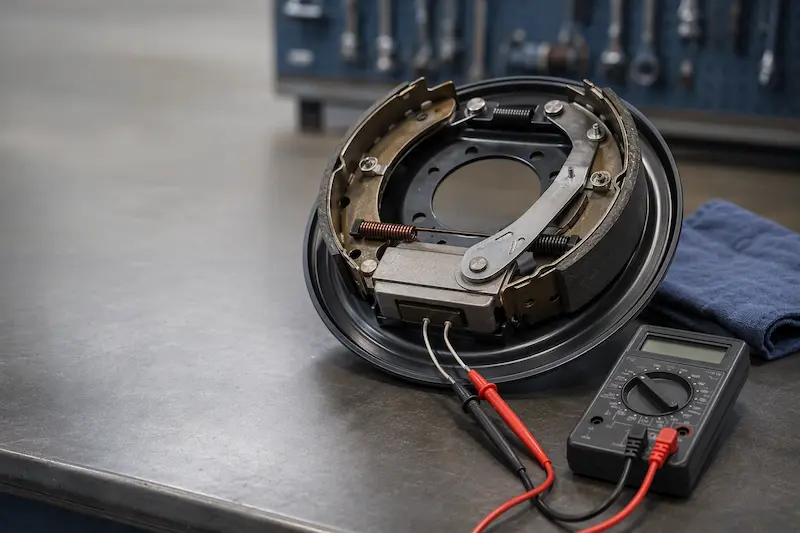
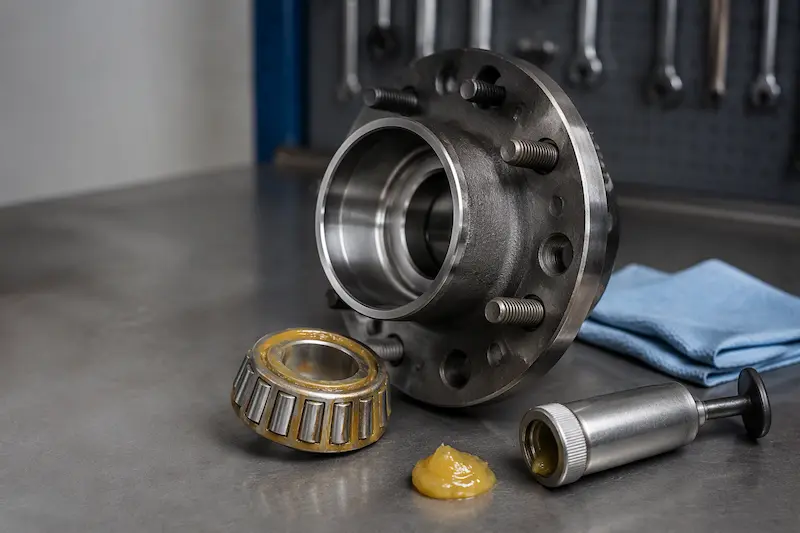
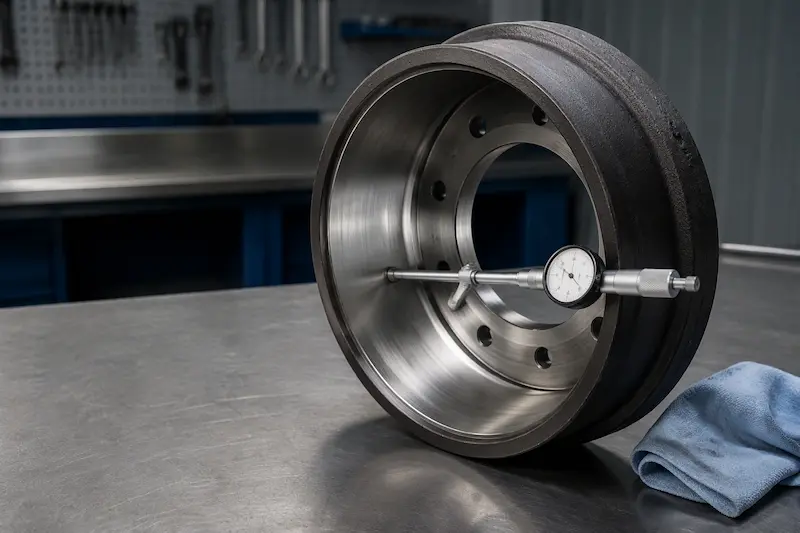
A manufacturer with in-house production makes this practical. At Weifang Top Trailer Accessories, one workshop produces trailer axles and axle accessories and precision stamping parts, while another machines brake drums, oil seals, and dust cups. Our OEM/ODM process covers everything from private labeling to custom tooling, so the parts arrive ready for your production line. In addition, you can pair custom axles with matched electric brake assemblies from the same factory, which simplifies sourcing and keeps responsibility in one place.
Benefit 3: Full Visibility Into Quality Control
Quality does not depend on luck when you can see it. Working directly with a Chinese manufacturer gives you access to the people who build your parts and the records they keep. Ask for pre-shipment inspection, production photos, and third-party test reports, and a serious factory will provide all three.
Look for a supplier with dedicated QC staff rather than spot checks on the line. Our company employs 15 quality control personnel who monitor every production step, supported by 10 engineers who handle technical guidance and product improvement. Meanwhile, the standards themselves give you a checklist: the NHTSA publishes the federal standards, and our comparative guide to trailer brake regulations shows how the U.S., Canada, Australia, and New Zealand differ — useful when you sell into multiple markets.
Benefit 4: Faster Iteration and Shorter Lead Times
Every layer between you and the factory adds delay. When you work directly, a design change goes from your email to the engineer’s desk in hours, not weeks. The same applies to production scheduling: you see your order’s position in the queue and you adjust dates when your own demand shifts.
That said, lead times still depend on the supplier’s capacity and your component complexity. In practice, direct buyers gain the most from clear communication. Send complete drawings, agree on the inspection criteria before production starts, and confirm the Incoterms that define who handles freight and insurance (ICC Incoterms® 2020 gives you the standard framework). With those details settled, the factory can commit to dates it can actually keep.
Benefit 5: Stronger Margin Control and Long-Term Partnership
A direct relationship compounds over time. Repeat volume earns you better pricing, priority production slots, and a supplier who understands your quality bar. Moreover, you control the entire cost structure — parts, tooling, inspection, freight — instead of accepting a packaged price from a distributor.
The Risks — and How to Manage Them
Direct sourcing has risks, and pretending otherwise would not serve you. Here are the main ones and the practical countermeasures.
Communication gaps. Distance and language can blur specifications. Countermeasure: put every requirement in writing, approve samples before mass production, and work with a factory that offers English-speaking sales and engineering staff.
Payment exposure. You pay before you see the goods. Countermeasure: structure payments sensibly — a deposit with production, then the balance against documents — and use Incoterms to define delivery obligations precisely.
Import and customs complexity. Every country has its own entry rules. Countermeasure: review the U.S. Customs and Border Protection guide to basic importing and exporting or your local customs authority before your first shipment, and classify your parts correctly to avoid duty surprises.
Quality variance between batches. Countermeasure: agree on inspection standards, run pre-shipment checks, and audit periodically — a video walkthrough of the production line costs nothing and tells you a lot.
How to Start: From RFQ to First Container
The path is straightforward if you follow it in order. First, send a request for quotation with your drawings, target quantities, and the standards you need. Second, evaluate samples against your specification and keep the approved sample as the reference. Third, place a pilot order and inspect the first production batch before scaling. Finally, move to scheduled production with agreed lead times and inspection points.
At every stage, a manufacturer that produces its own parts and welcomes your questions earns your trust faster than one that only trades. Send us your specification, and our engineers will review it and quote your custom configuration — contact us to start the conversation.
FAQ
Q1: What does OEM mean for trailer parts? OEM trailer parts are components manufactured to a buyer’s exact specification — dimensions, materials, and ratings — for use in the buyer’s own trailers or resold under the buyer’s brand.
Q2: How much can I save by sourcing OEM trailer parts from China directly? Savings vary by product and volume because the factory price removes the distributor’s margin. In general, the larger and more repeatable your orders, the larger the gap between direct and distributed pricing.
Q3: How do I verify the quality of a Chinese trailer parts manufacturer? Request samples, dimensional drawings, and inspection reports. Ask for pre-shipment inspection and third-party testing, check compliance with standards such as 49 CFR Part 567 and FMVSS No. 120, and look for dedicated QC staff and engineer-backed technical support.
Q4: What are the minimum order quantities for OEM trailer parts? MOQs depend on the component and whether custom tooling is involved. Stamping parts and axles often require a modest initial quantity to spread tooling cost, while many factories offer flexible terms for pilot orders.
Q5: Can the manufacturer put my brand on the parts? Yes. Private labeling and custom packaging are standard OEM services, and you can own the tooling so the parts remain exclusively yours.
Conclusion
Buying OEM trailer parts directly from a Chinese manufacturer gives you lower unit costs, real customization, visible quality control, and a supply relationship you can grow. The risks — communication, payment, customs, and consistency — are manageable with clear specifications, documented inspection, and the right trade terms. Choose a factory with in-house production, dedicated QC, and export experience, and the direct route will pay for itself many times over. Get in touch with your requirements today.