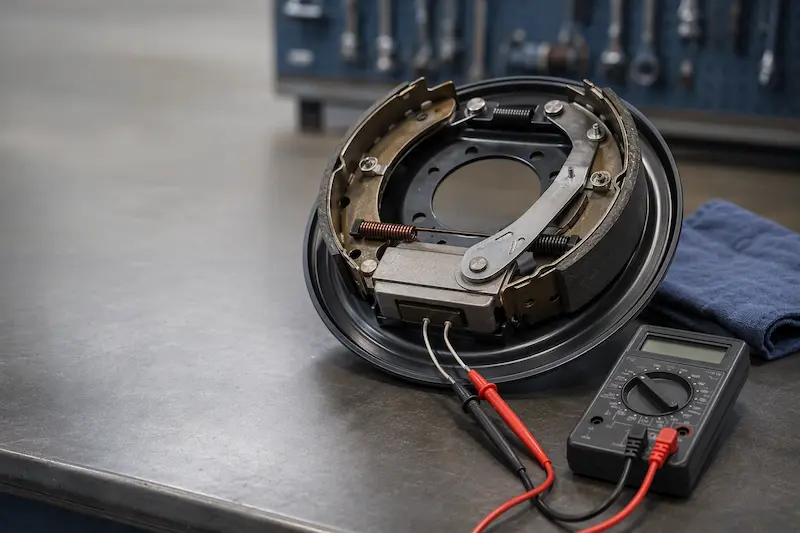

When it comes to trailer safety, your braking system is the most critical component. But not all brake pads are created equal.
Whether you manufacture trailers, operate a fleet, or simply maintain your own heavy-duty vehicle, choosing the right friction material can mean the difference between a safe stop and a costly accident.
In this guide, we’ll break down the three main types of brake pads – semi-metallic, ceramic, and organic – based on real-world performance, lifespan, and application fit.
1. Semi-Metallic Brake Pads – Best for Heavy Loads & High Heat
Composition:
Made from 30–65% metal content (iron, steel, copper, graphite) combined with friction modifiers.
Performance:
-
Excellent heat transfer – ideal for heavy braking or mountainous terrain
-
Strong initial bite even at high temperatures
-
Consistent pedal feel under load
Lifespan: 30,000 – 50,000 miles (trailer use may vary)
Drawbacks:
-
Can be noisier than other types
-
Slightly higher rotor wear
-
Performs less effectively when cold
✅ Best for: Heavy-duty trailers, commercial trucks, off-road vehicles, frequent mountain towing.
2. Ceramic Brake Pads – Quiet, Clean & Long-Lasting
Composition:
Ceramic fibers, copper fibers, and non-ferrous filler materials bonded with high-heat resin.
Performance:
-
Extremely quiet operation
-
Minimal brake dust – keeps wheels cleaner
-
Stable friction coefficient across a wide temperature range
Lifespan: 40,000 – 70,000 miles
Drawbacks:
-
Higher upfront cost
-
May require slightly longer stopping distance under extreme cold or very heavy loads
✅ Best for: Light to medium-duty trailers, daily tow vehicles, drivers who prioritize low maintenance and clean wheels.
3. Organic (NAO – Non-Asbestos Organic) Brake Pads – Economical & Gentle
Composition:
Glass, rubber, Kevlar, carbon, and other organic fibers bonded with resin. No asbestos.
Performance:
-
Very soft on rotors
-
Quiet operation
-
Lowest cost option
Lifespan: 20,000 – 35,000 miles
Drawbacks:
-
Wears faster under heavy use
-
Produces more brake dust
-
Fades more quickly under extreme heat or repeated heavy braking
✅ Best for: Light-duty trailers, occasional use, or budget-conscious applications where heavy braking is rare.
Which Brake Pad Material Is Right for Your Trailer?
| Your Application | Recommended Pad Type |
|---|---|
| Heavy equipment / frequent mountain towing | Semi-Metallic |
| Daily highway towing, clean wheels desired | Ceramic |
| Light utility trailer, low annual miles | Organic (NAO) |
| Mixed use (highway + city) | Ceramic or Semi-Metallic |
Pro Tip from Weifang Top Trailer:
Always match your brake pad material to your typical load weight and terrain. Using organic pads for heavy-duty applications will lead to premature failure and unsafe stopping distances.
How to Inspect Your Trailer Brake Pads (3 Quick Steps)
-
Look through the wheel spokes – If pad thickness is less than ¼ inch (≈6mm), replace them.
-
Listen while braking – Squealing often means wear indicators are touching the rotor. Grinding means metal-on-metal – replace immediately.
-
Check braking distance – If your trailer takes longer to stop than usual, inspect pads and rotors.
Why Choose a Certified Brake Pad Manufacturer?
Not all brake pads meet legal safety standards. For road-legal trailers in Europe or North America, always choose pads that comply with:
-
ECE R90 (European Union)
-
ISO/TS 16949 (global automotive quality standard)
Certified pads ensure consistent friction, proper fitment, and safe performance – even under emergency braking.
Final Recommendation
If you manufacture or maintain trailers for commercial use:
-
Front axle (steering): Prefer ceramic or semi-metallic for reliable stopping.
-
Rear axle / trailer axles: Semi-metallic is often the most cost-effective and durable choice.
Still unsure?
Contact our engineering team at Weifang Top Trailer – we manufacture brake pads, shoes, and precision components for global customers. We can recommend the exact material based on your axle load, tire size, and typical route.