When shopping for a replacement axle for your utility trailer or RV, there are several important factors to consider. Do you know your trailer’s weight capacity? Are you familiar with the proper way to measure for a replacement axle? Do you need new hangers or leaf springs along with the axle beam?
While choosing the correct axle may seem overwhelming, this guide breaks down the essentials so you can make your purchase with confidence.
Axle Basics
Understanding the fundamental parts of a cargo trailer axle helps you make the right selection. Use the definitions below as a reference when choosing axles or axle components.
Trailer Axle Components
-
Axle beam – A rigid steel tube that connects the wheels and forms the foundation of the trailer’s suspension system.
-
Lugs – Nuts used with bolts to secure the wheel to the axle hub.
-
Attaching parts – Hardware used to bolt leaf springs onto the hangers.
-
Hangers – Components mounted to the trailer frame that hold the leaf springs in place.
-
Leaf springs – Curved layers of metal that support the trailer’s weight and help absorb road shock.
-
U-bolts – Keep the leaf springs clamped to the axle.
-
Shackles – Allow leaf springs to expand and contract as the trailer travels over varying terrain.
-
Equalizers – Rock back and forth between leaf springs to help distribute load and improve ride quality.
How to Measure a Trailer Axle
Knowing your axle measurements and understanding available axle configurations ensures you purchase the correct replacement.
The easiest method is to locate the manufacturer’s tag—usually found on the trailer tongue—which includes the VIN and weight ratings. The axle itself may also have a tag indicating the necessary replacement specifications.
If the tag is missing, you can still measure the axle using the steps below.
Trailer Axle Measuring Resources
Whether your trailer uses a single, double, or triple axle setup, each requires accurate measurements for safe towing. Use axle-specific measuring videos (if available) to guide you through the process step-by-step.
How to Measure Trailer Axle Length
Two key measurements determine axle length:
-
Hub face – Distance from the outside face of one hub to the outside face of the opposite hub.
-
Spring center – Distance between the centers of the spring seats on each side of the axle.
Axle lengths are noted using both measurements.
For example:
58/46 = 58-inch hub face, 46-inch spring center.
Common Trailer Bolt Patterns & How to Measure Them
Your wheel’s bolt pattern is determined by:
-
The number of bolts (lugs)
-
The diameter of the imaginary circle they form
How to measure:
-
5-lug pattern: Measure from the outside of one bolt to the center of the bolt two spots away (skip one).
-
4-, 6-, or 8-lug pattern: Measure from the center of one bolt directly across to the center of the opposite bolt.
Example:
A wheel with 5 bolts and a 4.5-inch bolt circle has a 5 on 4.5″ bolt pattern.
Trailer Axle Capacity
Knowing your trailer’s weight capacity helps ensure safe towing.
-
Single axle = one axle with one set of wheels
-
Tandem axle = two axles, essentially doubling support if capacities match
-
Tri-axle = three axles for even greater load capability
Use a trailer axle capacity chart to match your trailer’s required ratings.
Trailer Axle Styles & Configurations
When selecting a replacement axle, several style and configuration options must be considered.
1. Spindle Style: Straight vs. Drop
-
Straight spindle – Keeps the hub aligned with the axle tube; standard height.
-
Drop spindle – Lowers the trailer bed height by raising the hub position relative to the axle tube.
2. Leaf Spring Orientation: Overslung vs. Underslung
-
Overslung – Leaf springs sit on top of the axle, increasing trailer height.
-
Underslung – Leaf springs sit under the axle, lowering the trailer’s ride height.
This affects ground clearance, handling, and overall driving stability.
3. Hub Styles: Brake vs. Idler
-
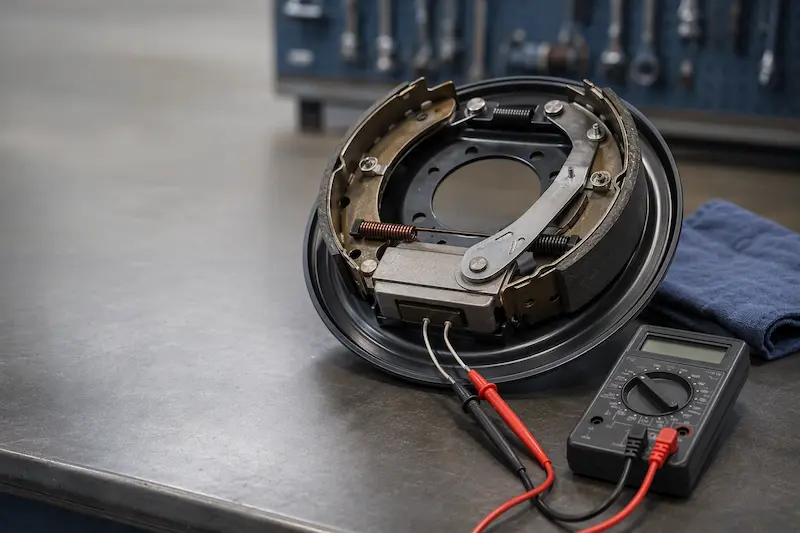
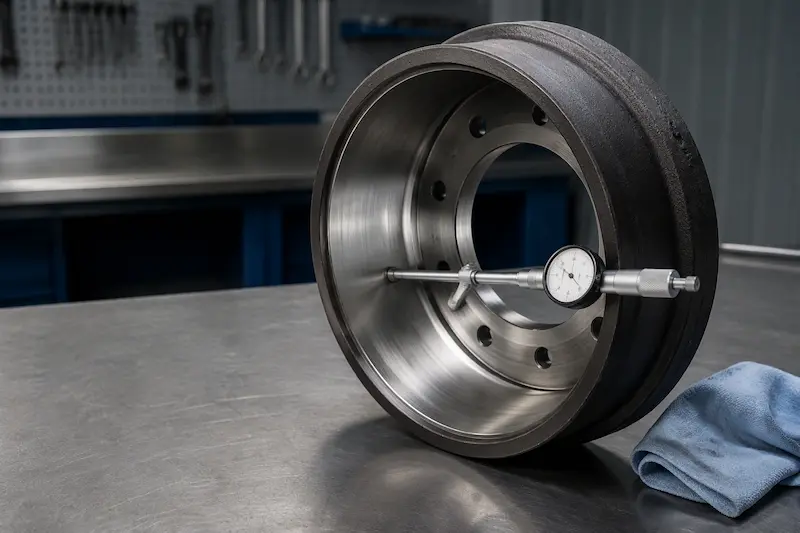
Brake hubs – Support electric, hydraulic drum, or disc brakes.
-
Idler hubs – For trailers without brakes.
Optional Installation Kits
When purchasing a spring axle, the following kits are optional but often necessary:
-
Leaf spring kits – Include leaf springs and U-bolts (but not hanger hardware).
-
Attaching Parts (AP) kits – Provide hardware to bolt the leaf springs to the hangers.
-
Hanger kits – Mount leaf springs to the trailer frame but do not include attaching parts.
Ready to Purchase a Trailer Axle?
Now that you understand the key considerations—measurements, capacity, spindle type, hub style, and spring orientation—you’re ready to select a replacement axle with confidence.
Lippert manufactures a full range of durable 2K–12K spring axles designed for utility trailers, enclosed cargo trailers, teardrop trailers, and travel trailers.
Disclaimer
All content in this blog—including photographs, illustrations, recommendations, and technical information—is for general informational purposes only. It does not reflect specifications or requirements for any specific vehicle, equipment, or component. Always refer to the manufacturer’s Owner’s Manual and follow all applicable safety and technical guidelines.
Contact Us
Trailer Axles are essential vehicle components for many tasks and industries — commercial or recreational. Weifang Top is an award-winning dealer and a one-stop shop for all your trailer needs.
Our expert team will help you find the right trailer options, and we’ll inspect, customize and deliver it straight to you.
Our vast inventory ensures you can find a trailer that fits your requirements, application and budget. Browse our high-quality trailers or contact us to learn about our products and services.
For more details on installation and specifications, visit our official product page or contact our technical support team for personalized assistance.