
You are shopping for a new trailer — or finally upgrading an old one — and every seller keeps throwing around the same three words: electric, hydraulic, and surge. They all stop the trailer, so what is the actual difference? More importantly, which trailer brake system is right for your towing setup?
That is exactly what this guide answers. We will compare how each trailer brake system works, weigh the pros and cons of each, and finish with a simple decision framework you can use today.
Why Your Trailer Brake System Choice Matters
First, let us be clear about why this choice matters so much. A loaded trailer can easily weigh more than your tow vehicle, and your truck’s brakes alone cannot safely stop that combined weight. As a result, federal regulators require brakes on trailers above certain weight thresholds in most states and provinces. For example, the Federal Motor Carrier Safety Administration (FMCSA) sets braking and stopping-distance requirements for commercial combinations, while the National Highway Traffic Safety Administration (NHTSA) includes brake checks in its core trailer safety guidance. Therefore, the brake system you choose is not just a comfort feature — it is a legal and safety decision.
Moreover, your choice affects day-to-day towing feel, maintenance costs, and even resale value. Consequently, it is worth understanding the three options before you commit.
How Electric Brakes Work
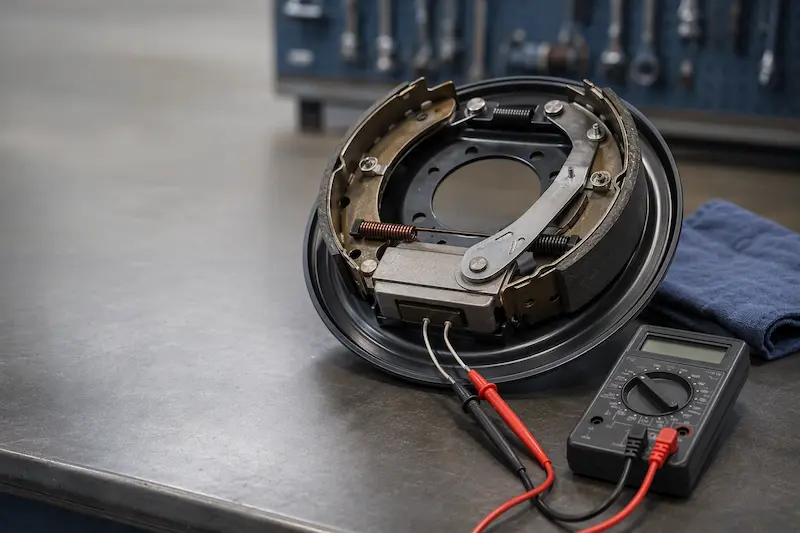
Electric brakes are the most common trailer brake system in North America and Australia — and the type we manufacture at Weifang Top. Here is the simple version: a brake controller in your tow vehicle sends an electrical current through the 7-way plug to an electromagnet inside each wheel’s brake assembly. The energized magnet drags against the spinning brake drum, a lever arm converts that drag into outward force, and the brake shoes press against the drum to slow the wheel.
Pros: precise, proportional stopping that syncs with your truck; affordable parts; easy DIY maintenance; long service life.
Cons: requires a brake controller in the tow vehicle; wiring must be maintained; can fade on very long mountain descents if abused.
If you are new to electric brakes, our guide on setting the magnet air gap the right way covers the single most important adjustment, and you can browse our complete electric brake assemblies if you are ready to upgrade.
How Hydraulic (Electric-Over-Hydraulic) Brakes Work
Hydraulic brakes in this comparison usually mean electric-over-hydraulic (EOH) systems. Instead of a magnet pushing shoes, an electric actuator mounted on the trailer pressurizes brake fluid, which pushes hydraulic calipers or wheel cylinders. In other words, the controller still does the thinking, but the work is done by fluid pressure rather than a magnet.
Pros: the smoothest, strongest stopping of the three options; excellent on heavy RVs and car haulers; disc-brake versions resist fade well.
Cons: the most expensive system to buy and maintain; brake fluid needs periodic bleeding and inspection; more components that can fail.
How Surge Brakes Work
Surge brakes are a completely different animal. They need no brake controller and no wiring: a hydraulic coupler sits in the trailer tongue, and when the tow vehicle slows, the trailer’s inertia pushes the coupler inward, compressing a master cylinder that applies the brakes hydraulically.
Pros: zero installation in the tow vehicle — no controller, no 7-way wiring; ideal for rental trailers and occasional towers; very popular on boat trailers because there are no electrical parts to corrode in salt water.
Cons: braking is less proportional and can feel “jerky”; you cannot manually apply the brakes from inside the cab; heavier tongue weight; not allowed on trailers above certain weights in some regions.
Electric vs. Hydraulic vs. Surge: Side-by-Side Comparison
Now that you understand each design, here is the quick-reference comparison for choosing a trailer brake system:
| Factor | Electric | Hydraulic (EOH) | Surge |
|---|---|---|---|
| Activation | Controller sends current to magnet | Controller drives hydraulic actuator | Trailer inertia compresses coupler |
| Controller needed | Yes | Yes | No |
| Stopping smoothness | Very good | Excellent | Good, can be jerky |
| Stopping power | Strong | Strongest | Moderate |
| Cost to buy | Low–moderate | High | Moderate |
| Maintenance | Inspect magnets/shoes/drums | Bleed and check fluid | Check coupler and fluid |
| Best for | Cargo, utility, most trailers | Heavy RVs, car haulers | Boat and rental trailers |
| Saltwater resistance | Poor (electrical parts) | Moderate | Excellent |
Meanwhile, remember that the brakes are only part of the story — the axle and suspension also determine how the trailer rides and stops. Our leaf spring vs. torsion axle guide is a great companion read when you are speccing a new trailer.
Which Trailer Brake System Is Right for You?
Here is the practical decision framework we recommend to our customers:
- Choose electric brakes if you tow a cargo, utility, livestock, or equipment trailer behind a vehicle that already has (or can accept) a brake controller. It is the best all-round value, and parts are everywhere.
- Choose hydraulic (EOH) if you tow a large RV, car hauler, or other heavy load and want the smoothest, most fade-resistant stopping money can buy.
- Choose surge brakes if you tow a boat trailer, especially in saltwater areas, or if you frequently tow with different vehicles and want zero controller installation.
Specifically, if you are still unsure, ask yourself one question: who will tow it? If the answer is “one truck, wired and ready,” electric is usually the smart pick. If the answer is “everyone and anyone,” surge brakes remove the controller problem entirely.
Maintenance Tips for Any Trailer Brake System
Whichever system you choose, routine care decides how long it lasts. Here is a checklist that applies across all three:
- Inspect brake shoes and replace them when lining drops below roughly 1/16 inch.
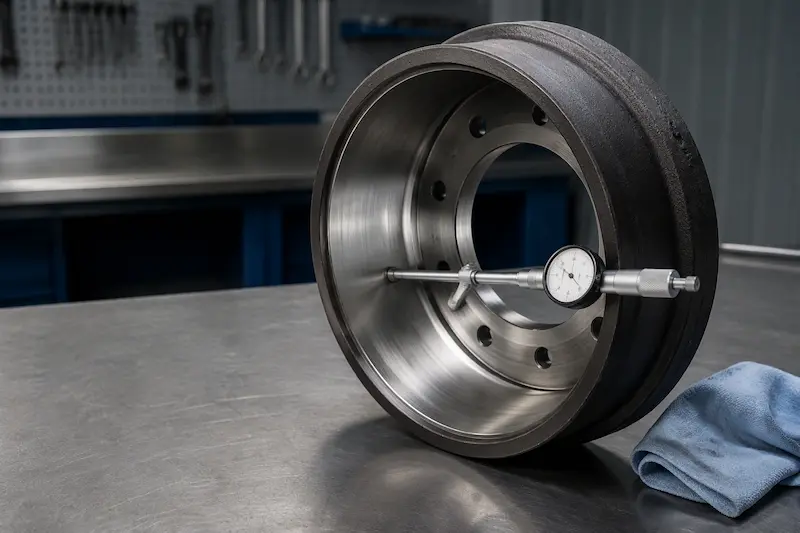
- Check drums for scoring, heat cracks, and out-of-round wear — see our brake drum and disc range when replacement is due.
- For electric systems, check the magnet faces and the air gap each season.
- For hydraulic and surge systems, check the fluid level and bleed the lines annually.
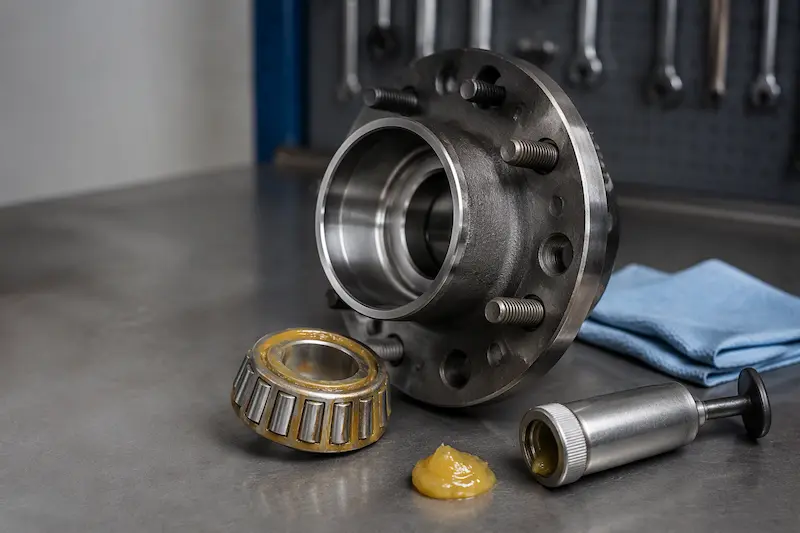
- Repack wheel bearings and inspect the seals, and keep the whole trailer axle assembly on your yearly inspection list.
In addition, always test the brakes before the first trip of the season at low speed, on an empty road.
Conclusion
To summarize, the right trailer brake system depends on how you tow: electric brakes offer the best value and precise control for most trailers, hydraulic (EOH) systems deliver the smoothest stopping for heavy loads, and surge brakes shine on boat trailers and multi-vehicle towing. Whichever way you go, understanding how the system works is the first step to towing safely for years.
If you would like help sourcing the right components — whether a complete electric brake assembly, brake drums, or a full axle package — our team is happy to advise. Visit our contact page for a quotation or product catalog, and we will get back to you within 24 hours.