When it comes to trailer safety and performance, choosing the right braking system is a critical business decision. Whether you’re hauling construction equipment, agricultural machinery, commercial cargo, or recreational vehicles, the braking system directly affects operational efficiency, maintenance costs, and overall safety.
Among the most common options available today are electric trailer brakes and hydraulic trailer brakes. Each system has unique advantages and limitations depending on your business requirements.
In this guide, we’ll compare electric and hydraulic trailer brakes based on three key factors: cost, response speed, and operating environment, helping you determine which solution best fits your fleet.
Understanding Electric Trailer Brakes
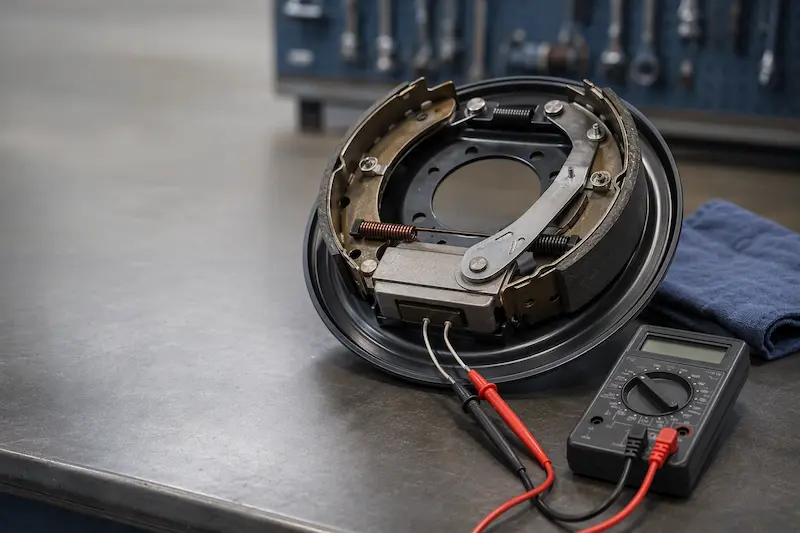
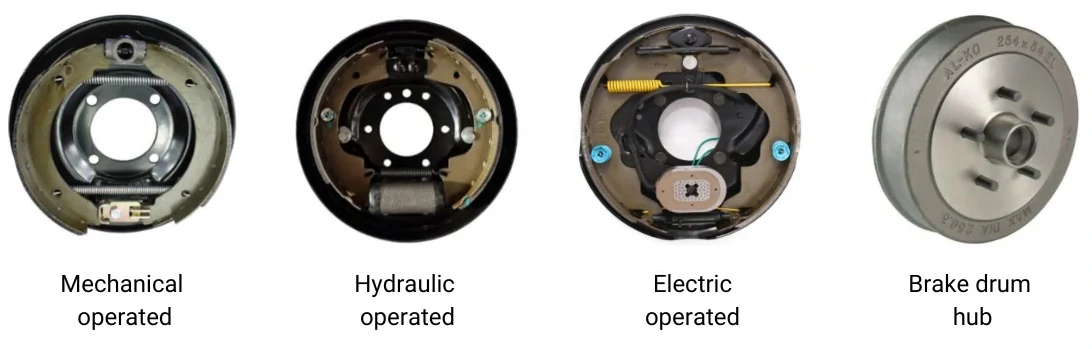
Electric trailer brakes use an electrical signal from the tow vehicle’s brake controller to activate brake magnets inside the trailer’s brake assemblies. The braking force can be adjusted directly from the vehicle, giving drivers greater control over stopping performance. Electric brakes are widely used on utility trailers, cargo trailers, RVs, and light-to-medium-duty commercial applications.
Advantages of Electric Brakes
- Lower initial purchase cost
- Easy installation and maintenance
- Adjustable braking force from the cab
- Widely available replacement parts
- Suitable for most standard towing applications
Limitations of Electric Brakes
- Depend on wiring and electrical connections
- Performance may be affected by water, mud, or corrosion
- Less suitable for extremely heavy-duty applications
Understanding Hydraulic Trailer Brakes
Hydraulic trailer brakes use fluid pressure to transfer braking force from the tow vehicle to the trailer wheels. They are available as surge brake systems or electric-over-hydraulic (EOH) systems and are commonly used on heavy equipment trailers, boat trailers, livestock trailers, and commercial hauling operations.
Advantages of Hydraulic Brakes
- Strong and consistent stopping power
- Excellent performance under heavy loads
- Better resistance to harsh environmental conditions
- Smooth braking with less fade during extended use
Limitations of Hydraulic Brakes
- Higher purchase and installation costs
- More complex maintenance requirements
- Hydraulic fluid inspections and servicing are necessary
Cost Comparison
For many businesses, budget plays a significant role in equipment selection.
Electric Brakes: Lower Upfront Investment
Electric braking systems generally have lower acquisition and installation costs. The components are simpler, replacement parts are widely available, and maintenance is relatively straightforward. This makes electric brakes an attractive option for small businesses and fleets operating light-to-medium-duty trailers.
Hydraulic Brakes: Higher Initial Cost, Potential Long-Term Value
Hydraulic systems require additional components such as hydraulic lines, actuators, master cylinders, or electric-over-hydraulic pumps. As a result, installation costs are typically higher. However, for businesses that frequently haul heavy loads, hydraulic brakes can provide longer-lasting performance and reduced wear under demanding conditions.
Winner for Cost Efficiency: Electric Trailer Brakes
Response Speed Comparison
Brake response time directly impacts safety and control, especially when transporting valuable cargo or operating in challenging road conditions.
Electric Brakes: Fast and Adjustable
Electric brakes respond quickly because the braking signal is transmitted electronically from the brake controller. Drivers can also manually adjust braking intensity based on load weight and road conditions. This level of control is highly beneficial for highway transportation and varying cargo loads.
Hydraulic Brakes: Smooth and Powerful
Hydraulic systems provide strong, progressive braking force through fluid pressure. Electric-over-hydraulic systems offer particularly fast and precise response, making them ideal for heavy-duty commercial applications. Surge hydraulic systems may exhibit slight activation delay because they rely on trailer momentum to engage the brakes.
Winner for Heavy-Duty Performance: Hydraulic Brakes (especially EOH systems)
Winner for Driver-Controlled Adjustability: Electric Brakes
Environmental Suitability Comparison
The operating environment can significantly influence brake performance and maintenance requirements.
Electric Brakes in Dry Conditions
Electric brakes perform exceptionally well in dry environments and on paved roads. They are commonly used for enclosed cargo trailers, utility trailers, and general commercial transportation. However, continuous exposure to water, mud, or corrosive environments may affect electrical components over time.
Hydraulic Brakes in Harsh Conditions
Hydraulic systems excel in wet and demanding environments. Because they rely on fluid pressure rather than electrical magnets, they are often preferred for boat trailers, agricultural equipment trailers, construction sites, and off-road applications. Hydraulic brakes generally maintain reliable performance even when exposed to water, dirt, or uneven terrain.
Winner for Harsh Environments: Hydraulic Trailer Brakes
Quick Comparison Table
| Feature | Electric Trailer Brakes | Hydraulic Trailer Brakes |
|---|---|---|
| Initial Cost | Lower | Higher |
| Installation Complexity | Easy | More Complex |
| Maintenance | Simple | Moderate |
| Brake Response | Fast and Adjustable | Strong and Consistent |
| Heavy Load Capability | Good | Excellent |
| Wet Environment Performance | Fair | Excellent |
| Driver Control | Excellent | Moderate to Excellent (EOH) |
| Best Applications | Utility, Cargo, RV, Light Commercial | Heavy Equipment, Boat, Agricultural, Industrial |
Which Brake System Is Right for Your Business?
The best trailer braking system depends on how and where your trailers operate.
Choose electric trailer brakes if your business:
- Operates mainly on highways and paved roads
- Hauls light-to-medium loads
- Requires lower upfront investment
- Values adjustable braking control
Choose hydraulic trailer brakes if your business:
- Frequently hauls heavy equipment or commercial loads
- Operates in wet, muddy, or off-road environments
- Prioritizes maximum stopping power and durability
- Requires consistent braking under demanding conditions
Final Thoughts
There is no one-size-fits-all solution when choosing between electric and hydraulic trailer brakes. Electric brakes offer affordability, easy maintenance, and excellent driver control, making them ideal for many standard commercial applications. Hydraulic brakes, on the other hand, deliver superior stopping performance and reliability in harsh environments and heavy-duty operations.
By carefully evaluating your fleet’s load requirements, operating conditions, and budget, you can select the braking system that delivers the best balance of safety, performance, and long-term value for your business.