Drum Brake vs Disc Brake: Brakes are an important component of every car and we rely on it not only to stop but also help us prevent a potential accident or collision. The car industry has progressed significantly from the early days of woodblock brakes to today’s sophisticated drum and disc brakes. Drum and disc brakes are the two most ubiquitous brake systems that you will find in today’s cars and in many cases, you will find both used on the same car. We explore the advantages and disadvantages of each system to tell you the differences.
Drum Brake vs Disc Brake
Drum brakes consist of a rotating drum with an enclosed brake shoe which is known for its durability and cost-effectiveness. The disc brakes use calipers to grip a spinning disc which offers a superior stopping power and heat dissipation which makes it perfect for high-performance vehicles.
| Feature | Drum Brakes | Disc Brakes |
| Stopping Power | Lower stopping power, especially at high speeds | Superior stopping power and responsiveness, especially at high speeds |
| Heat Dissipation | Poor heat dissipation, prone to overheating | Excellent heat dissipation, reducing brake fade |
| Cost | More affordable to manufacture and maintain | More expensive to manufacture and maintain |
| Maintenance | Simpler maintenance and inspection | More complex maintenance and inspection |
| Durability | Durable and long-lasting | Can be more prone to warping or needing replacement |
| Common Use | Rear wheels of economy vehicles and city cars | Front wheels and high-performance vehicles |
Drum Brakes
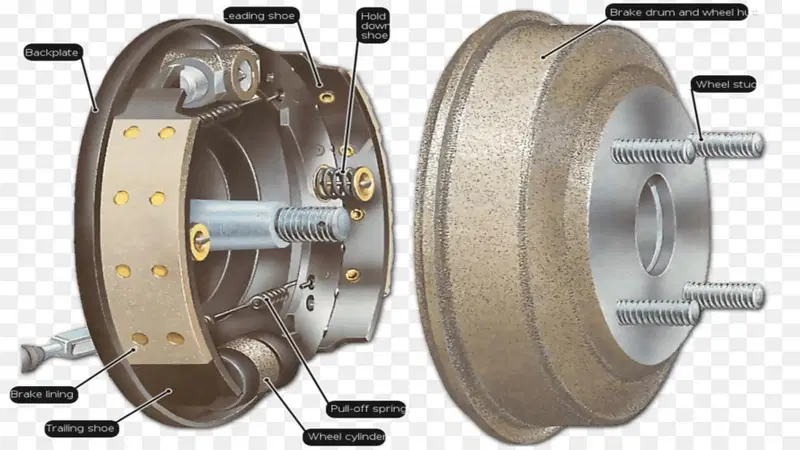
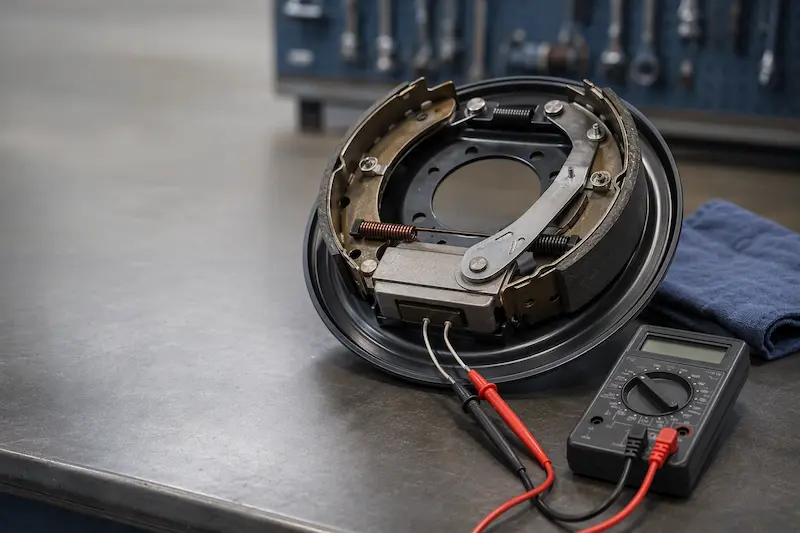
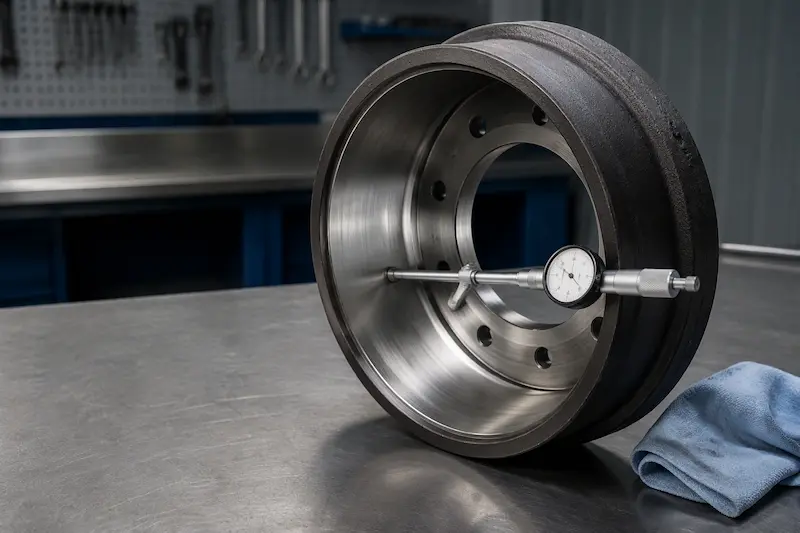
The first proper brakes on cars were the drum brakes, invented by French manufacturer Louis Renault in 1902. A drum brake consists of a drum, a housing connected to the wheel, brake shoes, which are fitted in the housing and a master cylinder that is connected to the brake pedal. When the brake pedal is pushed the master cylinder causes the brake shoes to rub against the inside of the rotating drum, creating friction and ultimately slowing down the wheel to a complete stop. Drum brakes are used on many mass produced cars and on the rear wheels on more premium car models.
Advantages of Drum Brakes
Low Cost: Drum brakes are cheaper to manufacture, hence they are more widely used on almost all types of vehicles.
Durability: Since drum brakes have an increased friction contact area, they last longer.
Low Input Force: Some drum brakes require low input force to get them activated, meaning less push on the brake pedal, this can be done through various means like hydraulic pressure.
Low maintenance: Due to better corrosion resistance, as they are inside of a housing, they are slightly easier to maintain.
Disadvantages of Drum Brakes
Overheat: Drum brakes tend to overheat in high braking conditions like going down a hill or frequent high speed braking, as they don’t have an outlet to cool themselves down. This causes the brake shoes to glaze or smoothen out and produce no braking action.
Pushing The Brake Pedal Farther: When hard braking occurs, the drum expands slightly due to a phenomenon called thermal expansion. So, to induce braking the driver must press the brake pedal farther.
Grabbing: Grabbing in a drum brake occurs when the brake shoe becomes wet or is slightly rusty. This causes it to offer more braking force than required and stays that way for a brief moment of time. When a grab occurs, the tyres skid and keep on skidding even when the pedal is released. This results in a loss of control of the car and is dangerous for the driver, especially at high speeds.
Complex construction: A drum brake has many components, requiring an expert mechanic for repairs.
Disc Brakes
Manufacturers introduced disc brakes at the same time as drum brakes, but a lack of proper technology and higher costs prevented them from taking off. The Crosley Hot Shot was the first car to use disc brakes, but insufficient research and reliability issues again kept them from becoming popular. However, in 1953, Jaguar equipped its racing car with disc brakes for the Le Mans 24-hour event. The car won the race, and its braking capabilities surprised everyone. The disc brakes on the Jaguar outlasted the drum brakes on other cars, making a winning debut for the technology. Since then, manufacturers have widely used disc brakes in mass-produced cars.
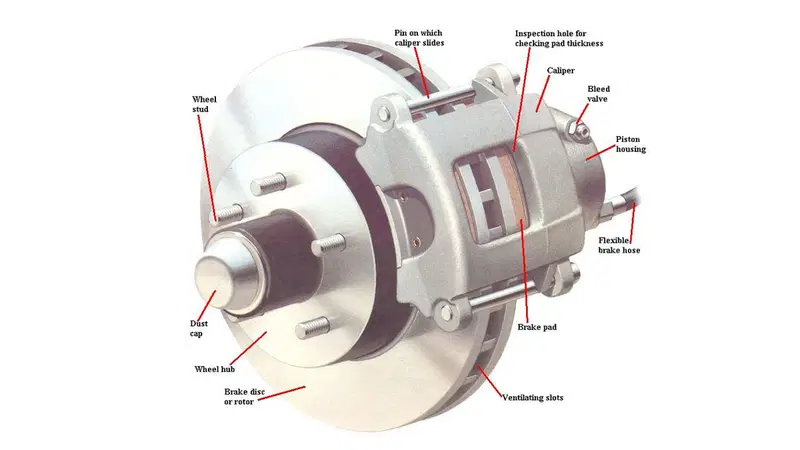
A disc brake consists of a disc (or rotor), a caliper that houses the brake pads, and a piston. When the driver pushes the brake pedal, hydraulic pressure forces the piston in the caliper to push the inner brake pad against the rotor. Simultaneously, the caliper uses the piston’s backward force to pull the outer brake pad against the other side of the rotor. This squeezing action pinches the disc with great force, which slows or stops the vehicle.
Advantages of Disc Brakes
Less Effort: Due to hydraulics as a standard on all disc brake systems, engaging a disc brake requires less effort and produces greater braking force.
Heat Dissipation: Due to the large surface area of discs any heat produced by friction of the brake pads on the disc dissipates into the atmosphere. This prevents overheating of the disc and improves braking even in frequent hard braking situations.
Standard Performance In Any Weather: Disc brakes perform well even in wet conditions and don’t slip or grab like their drum counterparts.
Easy Installation: A disc brake has a few components and hence very easy to install, even you can learn how to change the brake pads on your discs.
Disadvantages of Disc Brakes
Expensive: Disc brakes are downright expensive and that is the reason why car manufacturers opt for drum brakes on the rear wheels to bring down manufacturing costs.
Rotor Warping: In case of high speed braking there is a chance that the brake rotor might warp. This can happen due to very high temperatures on the discs followed by immediate cooling. Improper installation of the disc brake could also cause it to warp.
Brake Pad Wear Out: Brake pads on disc brakes tend to wear out faster than drum brakes, this happens due to the powerful squeezing motion of the brake piston on the brake pads. This provides better stopping power but reduced brake pad life.
Less Effective As Parking Brakes: The brake pads on discs tend to expand when heated and contract when cold. Since parking does not produce heat, the disc brakes are less likely to hold the wheels for a longer duration. This is the reason why high performance vehicles have an extra drum brake in addition to four wheel discs.
FAQs about Drum Brakes vs Disc Brakes
-
Q. What is this disc brake?
Ans: A disc brake is a type of braking system that uses a metal disc (or rotor) attached to the wheel. Its calipers squeeze the brake pads against the disc which further creates a friction slowing down or stopping the vehicle.
-
Q. Why is disc brake better?
Ans: Disc brakes are better because they provide superior stopping power, better heat dissipation, and consistent performance while being more responsive and less prone to brake fade against drum brakes.
-
Q. What is the function of the disc brake?
Ans: The function of the disc brake is to slow down and eventually stop the vehicle by converting kinetic energy into heat through friction while ensuring quick and controlled braking with improved steering stability.
-
Q. Which is better, disc brake or ABS?
Ans: Disc brakes and ABS (Anti-lock Braking System) serve different purposes as the brakes are a mechanical braking component while the other is an electronic safety system preventing wheel lock-up during hard braking. These work together for optimal safety and control of the vehicle.
-
Q. Is it brake disk or disc?
Ans: When talking in automotive terms, the correct spelling is ‘disc brake’ while the ‘disk’ is used in the computing world.
-
Q. How much does it cost to replace disk brakes?
Ans: The approximate cost to replace disk brakes in India typically ranges between ₹3,000 to ₹8,000 per axle. The final price depends on the car model, parts brand and labour charges which make premium cars disk brake replacement more expensive.
-
Q. Why are disc brakes used?
Ans: Disc brakes are used because of their better performance, faster response, and improved safety compared to traditional drum brakes along with their effectiveness in both high-speed and emergency braking situations.
-
Q. What is the disadvantage of disc brakes?
Ans: The disadvantages of disc brakes are higher cost, more complex maintenance, and potential warping under extreme heat or prolonged use.
For more details on installation and specifications, visit our official product page or contact our technical support team for personalized assistance.