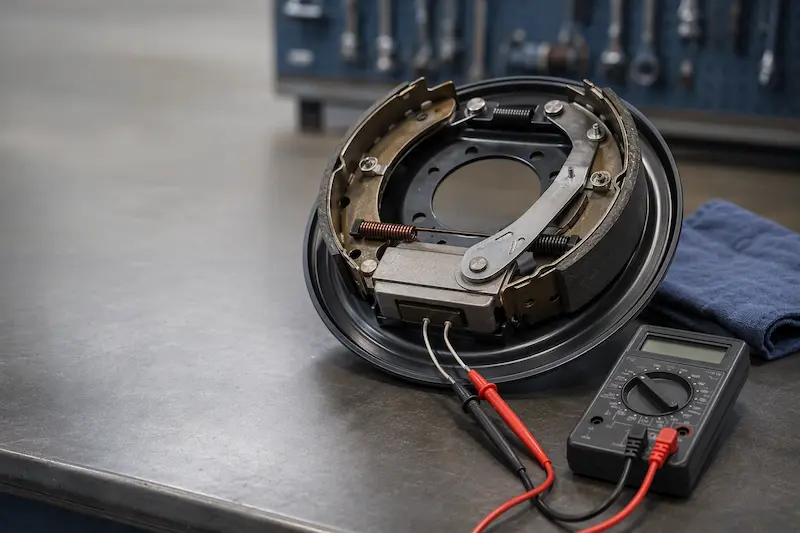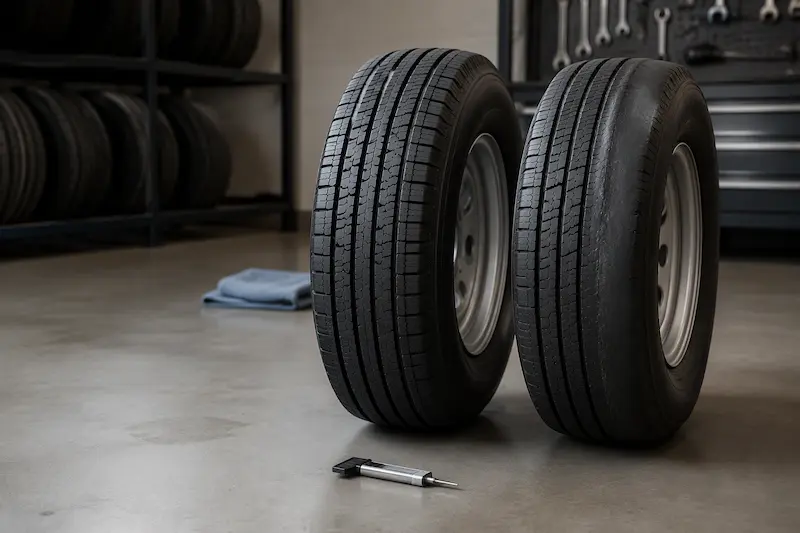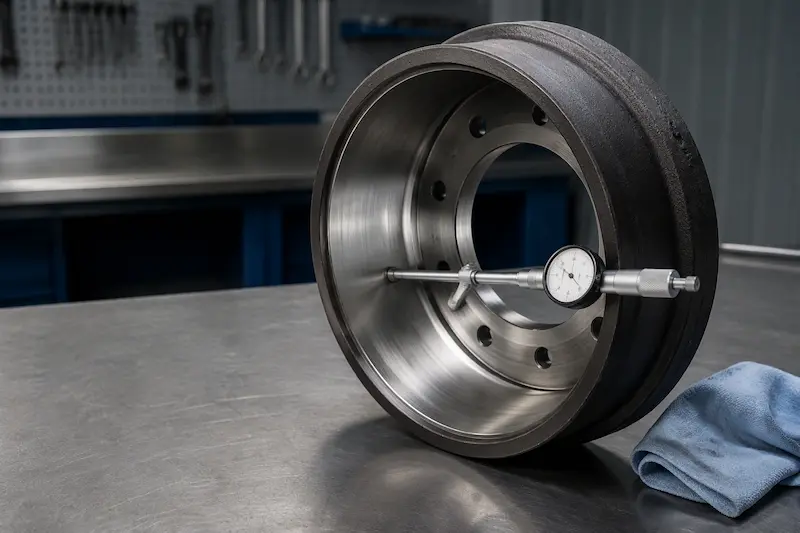
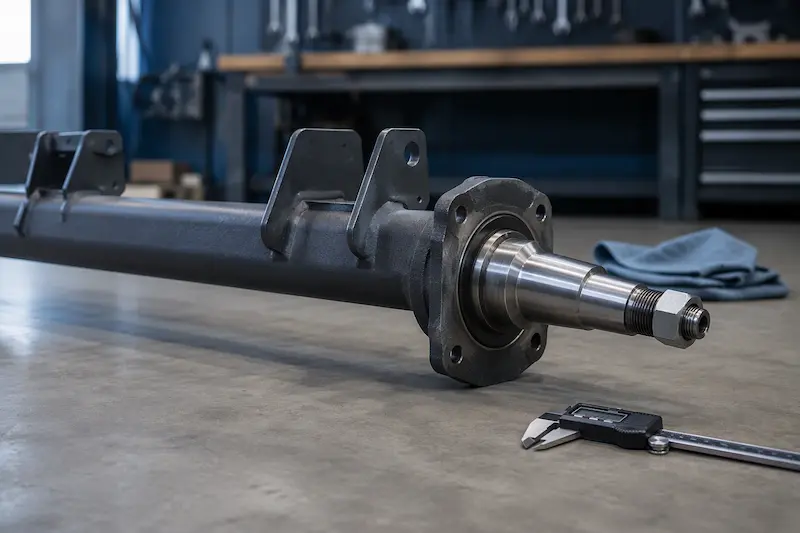
A listing that promises a “universally fits” trailer axle sells convenience, and it hides a trap. No universal trailer axle matches every trailer, because three hard dimensions decide whether a beam works: the capacity rating, the bolt pattern, and the spindle size. Change the trailer’s weight or its wheels, and at least one of those numbers moves.
At Weifang Top Trailer Accessories, we build trailer axles, hubs, spindles, and brake assemblies for trailer makers in the United States, Canada, Australia, and New Zealand. Consequently, fitment questions fill our technical inbox, and the failures repeat. This guide explains where a universal trailer axle claim breaks down and how to specify a trailer axle fitment that lasts.
1. What a “Universally Fits” Claim Really Means
Sellers apply the label “universal” to a common size that covers a wide family of trailers, not to every trailer in existence. A 3,500 lb axle, for instance, serves thousands of utility trailers, yet it will not fit a boat trailer that carries a heavier load or a caravan with a wider track. Therefore, read the claim as “fits many,” never as “fits yours.”
In addition, the trap closes quietly. A mismatched axle often bolts on without complaint, and the failure appears later as a bent spindle, a hot bearing, or a tire rubbing the frame. Above all, remember that an axle is a safety part: it carries the load, the wheels, and the brakes at the same time. A universal trailer axle label never changes that, and trailer axle fitment depends on matching those three dimensions.
2. Mismatch One: Capacity and the GAWR Reality
Every axle carries a gross axle weight rating, or GAWR, and that rating must cover the load the axle actually carries, not the load the trailer claims on paper. Capacity covers the beam, the spindle, the bearings, the hub, and the brakes as one system. Fit an axle below the real load, and the beam flexes past its design range, the axle spindle fatigues, and the bearings run hot.
However, pushing trailer axle capacity past the real load creates its own problem. An oversized axle adds unsprung weight, so the trailer rides harshly and the suspension absorbs less road shock. It also changes camber behaviour: a heavier beam flexes less, so the built-in positive camber may never reach zero at the real load, and the tires wear on their outer edges. The table below shows the common capacity classes and their normal duty.
| Axle capacity | Typical duty | Common brake option |
|---|---|---|
| 2,000–2,200 lb | Light utility and boat trailers | Idler or 7 in. brakes |
| 3,500 lb | Most single-axle utility trailers | 10 in. × 2-1/4 in. electric |
| 5,200 lb | Heavier single-axle and small tandem | 12 in. × 2 in. electric |
| 7,000 lb | Tandem utility, cargo, and car haulers | 12 in. × 2 in. electric |
| 8,000 lb | Heavy tandem and equipment trailers | 12-1/4 in. × 3-3/8 in. electric |
Common trailer axle capacity classes and typical duty — confirm against your axle tag.
Therefore, confirm the trailer axle capacity before you order, and weigh the real payload rather than trusting the sales sheet. Our guide to reading an axle tag or measuring tube diameter shows both methods when the tag has faded.
3. Mismatch Two: Bolt Pattern and the Wheel That Will Not Mount
The bolt pattern describes two values: the number of studs and the diameter of the circle they form, written as “5 on 4-1/2” or “8 on 6-1/2.” Buyers confuse it with wheel size, yet the two are unrelated. A wheel of the correct diameter and width still fails to mount when its stud circle differs, so the axle becomes useless for that trailer.
Measure the trailer bolt pattern before you buy, and match the centre bore at the same time. For example, a hub with the right stud circle can still miss on bore diameter and leave the wheel loose. The etrailer bolt pattern guide sets out the measurement methods, and our walkthrough on measuring a 5-lug trailer bolt pattern covers the odd-count hubs in detail.
| Distance between adjacent holes (5-lug) | Bolt pattern |
|---|---|
| 2-5/8 in. | 5 on 4-1/2 |
| 2-3/4 in. | 5 on 4-3/4 |
| 3 in. | 5 on 5 |
| 3-1/4 in. | 5 on 5-1/2 |
Meanwhile, the stud size and thread matter just as much, because the lug nuts must match the studs on the new hub. Common trailer bolt patterns include 4 on 4, 5 on 4-1/2, 5 on 4-3/4, 5 on 5, 5 on 5-1/2, 6 on 5-1/2, and 8 on 6-1/2. The RecStuff measurement guide publishes the same conversion table.
4. Mismatch Three: The Spindle Nobody Measures
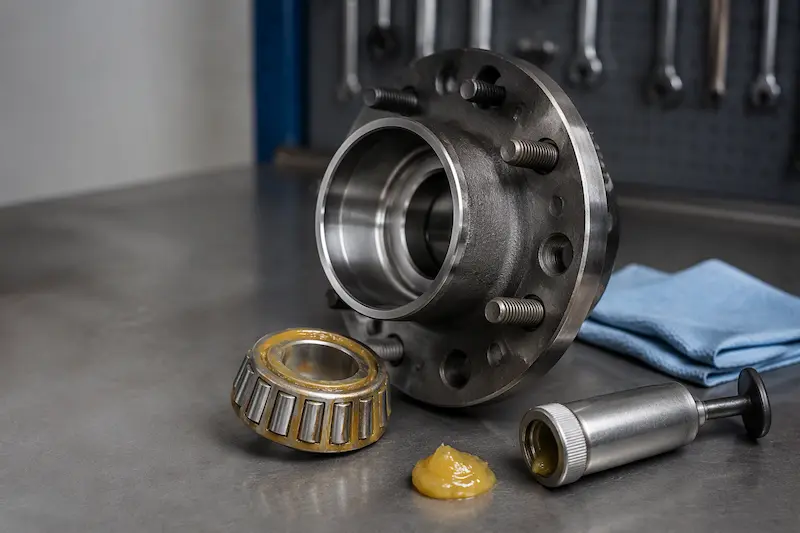
The axle spindle is the machined stub that carries the hub, and it hides the most common trailer axle fitment error of all. A spindle sets the bearing cone and cup sizes, the seal surface diameter, the thread for the spindle nut, and the position of the hub face. Fit a hub or bearing set that does not match the spindle, and the assembly either will not seat or runs with the wrong preload.
Moreover, bearings only work as matched cone-and-cup sets, so a mixed set wears fast and overheats. For example, a hub built for a 3,500 lb spindle will not accept the bearing set from a 5,200 lb spindle, even when the bolt pattern matches. Dexter therefore insists on matched bearing sets in its service instructions, and our axle parts guide shows how spindles, hubs, bearings, and seals stack together.
5. The Fourth Variable Buyers Forget: Spring Centres, Hub Face, and Camber
Three more dimensions decide a real trailer axle fitment, and a universal trailer axle listing rarely states them. The spring centre distance sets where the leaf springs sit, and it must match the trailer frame. The hub face sets the overall track width, and it controls wheel clearance inside the fenders. The camber angle is engineered into the beam, so a beam built for a different load runs at the wrong angle.
As a result, a beam that measures correct in length can still sit wrong on the trailer. Our article on axle camber and toe tolerances explains why a mismatched beam wears tires unevenly, and it shows how to check the geometry in the field. Consequently, treat spring centres, hub face, and camber as part of the fitment check, not as optional details.
6. What Actually Happens When the Axle Mismatches
A mismatched axle fails in one of two ways, and both cost more than the part. In the first case, the axle never fits: the wheel will not mount, the hub will not seat, or the springs will not line up. In the second case, the axle fits and then fails on the road, which is far more dangerous.
Finally, the road failure follows a recognizable pattern. An overloaded beam bends and loses its camber, a mismatched bearing set overheats and seizes, and a bent spindle destroys a new set of tires within a few thousand miles. A seized bearing at speed can throw a wheel, and that outcome threatens every vehicle nearby.
| Mismatch | What you check | Failure if wrong |
|---|---|---|
| Capacity | GAWR vs. real loaded weight | Bent beam, fatigued axle spindle, hot bearings |
| Bolt pattern | Stud count, bolt circle, centre bore | Wheel will not mount; loose wheel |
| Spindle | Bearing cone and cup, seal bore, thread | Hub will not seat; wrong preload; seizure |
| Spring centres | Distance between spring seats | Springs will not align to the frame |
| Camber and toe | Beam angle for the rated load | Uneven tire wear; dog tracking |
7. How to Specify the Right Axle: A Five-Point Checklist
Skip the universal promise and record five numbers instead. First, confirm the trailer axle capacity against the real loaded weight. Second, count the studs and measure the bolt circle. Third, measure the spindle and match the bearing set. Fourth, measure the spring centre distance. Fifth, measure the hub face and confirm the camber spec for the intended load.
Above all, order the axle as a complete wheel-end assembly, so the beam, spindle, hub, bearings, seals, and brakes arrive as one matched system. A complete assembly removes the guesswork, and it protects the braking balance across the axle pair. When you supply a drawing or a set of measurements, a manufacturer can build the trailer axle to your specification instead of to a generic average.
FAQ: Trailer Axle Fitment
Can one trailer axle fit more than one trailer? Only when the capacity rating, the bolt pattern, and the spindle size all match the trailer. One axle part number can serve several trailer models, but a truly one-size-fits-all axle does not exist, because those three dimensions change with the trailer’s weight and wheel choice.
How do I find my trailer axle’s capacity? Read the axle identification tag on the beam, which lists the gross axle weight rating. If the tag has faded, measure the tube diameter and hub face, then match those values to the published specification for that diameter.
What happens if I fit an axle with a higher capacity than the trailer needs? The trailer rides stiffer, because the heavier axle carries more unsprung weight and flexes less. That change also alters camber behaviour, since a heavier beam may not reach zero camber at the real load, so the tires can run on their outer edges.
Is the bolt pattern the same as the wheel size? No. Wheel size describes rim diameter and width, while the bolt pattern describes the stud count and the diameter of the circle they form. Two wheels of the same size can carry completely different bolt patterns, so check both before you order.
Can I change the axle spindle on a trailer axle? No, not in normal service. A manufacturer welds the spindle to the beam in a precision fixture, and the camber and toe angles come from that weld. A damaged spindle therefore calls for a replacement axle.
How do I measure the bolt pattern on a 5-lug hub? Measure centre-to-centre between two adjacent studs, then compare the result with a reference table. For example, 2-5/8 in. equals a 5 on 4-1/2 pattern, and 3 in. equals 5 on 5. Confirm the centre bore at the same time.
Conclusion: Fit Is a Measurement, Not a Promise
“Universally fits” describes a size family, and a trailer axle only works when five measurements agree with your trailer. Capacity sets the strength, the bolt pattern mounts the wheel, the spindle carries the hub, and the spring centres and camber place the beam correctly. Measure all five, and the axle performs as designed for its full service life.
At Weifang Top Trailer Accessories, we build trailer axles, spindles, hubs, and brake assemblies to customer drawings, and we match complete wheel-end packages to each axle rating. As a result, every shipment arrives as a system that bolts on and brakes in balance. Browse our axle and brake parts range, review our OEM and ODM programs, or send us your axle specification for a same-day quotation.