Most trailer owners think about sustainability in terms of fuel economy — lighter trailers, aerodynamic designs, more efficient tow vehicles. Few consider the environmental footprint of the parts themselves. Yet every brake drum, axle beam, and stamped bracket on your trailer carries an environmental cost — or an environmental credit — depending on how the manufacturer produced it.
The global sustainable automotive manufacturing market will reach an estimated $515.74 billion in 2026 and projects to nearly double by 2034, according to Fortune Business Insights. This shift reflects more than regulatory pressure. Buyers increasingly demand parts that perform well, last longer, and come from responsible supply chains.
At Weifang Top Trailer Accessories, our manufacturing facility in Shandong, China, combines precision stamping and machining with sustainability practices that reduce waste, conserve energy, and produce longer-lasting components. This article explores how modern trailer parts manufacturing embraces sustainability — from the materials we choose to the processes we run — and what that means for the parts on your trailer.
Why Sustainability in Trailer Parts Manufacturing Matters
Trailer parts manufacturing involves energy-intensive processes: melting and casting iron for brake drums, forging and machining steel for axles, and stamping sheet metal into brackets, backing plates, and housings. Every stage consumes electricity, generates scrap, and produces emissions. When manufacturers optimize these processes, the benefits multiply.
Environmental impact: Steel production alone accounts for roughly 7% of global CO₂ emissions. However, recycling steel consumes up to 74% less energy than producing new steel from iron ore, and recycling aluminum uses approximately 95% less energy. Every ton of scrap steel diverted back into the supply chain instead of going to landfill represents a measurable environmental benefit.
Business value: Sustainable manufacturing practices also improve product quality and consistency. Energy-efficient modern press equipment runs with tighter tolerances. Closed-loop material systems reduce raw material costs. Durable products that last longer reduce warranty claims and build brand reputation.
Customer demand: Fleet operators, OEM buyers, and government procurement contracts increasingly require suppliers to demonstrate environmental responsibility. A manufacturer with documented sustainability practices gains a competitive advantage in these markets — especially in regions like the European Union, Australia, and New Zealand, where environmental standards continue to tighten.
Steel Recycling: The Foundation of Sustainable Trailer Parts
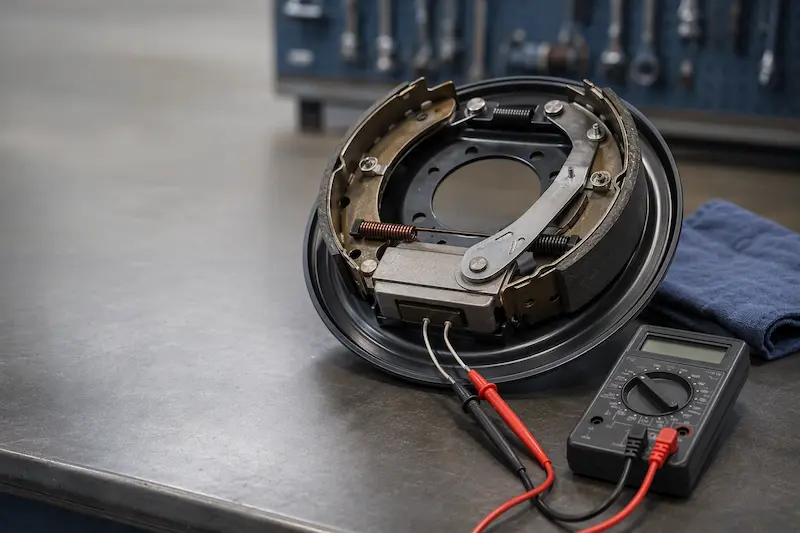
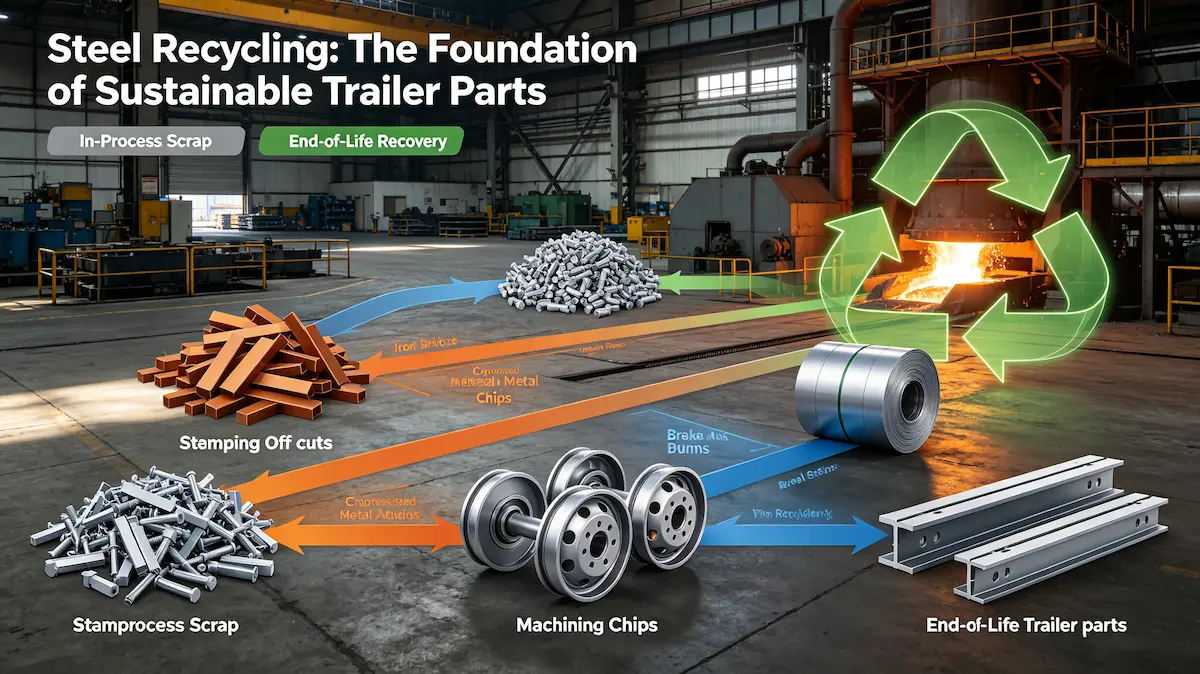
Steel forms the backbone of nearly every trailer component. Brake drums begin as cast iron. Axle beams and spindles start as forged or machined steel bar stock. Backing plates, brackets, and stampings come from sheet steel coil. The good news: steel is the world’s most recycled material, and it recycles infinitely without losing its structural properties.
How Steel Recycling Works in Parts Manufacturing
A responsible trailer parts manufacturer captures three streams of recyclable steel:
-
In-process scrap: Every stamping operation generates off-cuts, skeleton scrap, and rejected blanks. Instead of sending this material to landfill, sustainable manufacturers collect it in dedicated bins by alloy grade and return it to the steel mill for reprocessing. Clean, sorted stamping scrap commands a high recycling value and re-enters the supply chain as new coil within weeks.
-
Machining chips and turnings: Lathe-turned axle spindles, milled mounting surfaces, and drilled bolt holes all produce metal chips. These chips compress into briquettes and return to the foundry for remelting. A single CNC machining center can generate hundreds of pounds of recyclable steel chips per shift — capturing that material instead of discarding it represents both an environmental and an economic win.
-
End-of-life part recovery: When a trailer reaches the end of its service life, its steel components — axles, brake drums, frame rails, coupling hardware — all qualify for scrap metal recycling. High-quality original components with known alloy compositions are easier to recycle into new high-grade steel than mixed scrap of unknown origin.
The closed-loop advantage: In a closed-loop system, a manufacturer’s own scrap returns as new raw material. The brake drum casting you buy today may contain steel from the stamping skeletons of last month’s backing plate production. This circular approach minimizes the need for virgin iron ore and reduces the total carbon footprint of every part.
Precision Stamping: Doing More with Less Material
Metal stamping, by its nature, cuts shapes from flat sheet — and every cut produces some scrap. However, sustainable stamping operations minimize that waste through several proven strategies.
Optimized Nesting and Blank Design
Modern CAD/CAM software analyzes part geometry and arranges stamping patterns to maximize material utilization from every coil. Engineers adjust blank shapes, reposition parts on the strip layout, and sometimes redesign the part itself to fit more pieces into the same sheet area. Moving from 70% material utilization to 85% across a production run of 100,000 parts saves tons of steel and thousands of dollars — without changing the final part’s quality or dimensions.
Progressive Die Technology
Progressive stamping dies perform multiple operations — piercing, forming, bending, trimming — in a single press stroke as the strip advances through successive stations. This approach eliminates the material handling, setup time, and energy consumption of running the same part through multiple separate presses. One progressive die often replaces three or four single-operation tools, which means fewer machine starts, less electricity, and a smaller factory footprint per part produced.
Scrap Segregation by Alloy
Not all steel scrap carries the same value. Separating low-carbon steel scrap from alloy steel scrap, and ferrous metals from non-ferrous metals like aluminum or copper, enables the highest-value recycling pathway for each material. A manufacturer that simply dumps all scrap into a mixed bin loses the premium that sorted, clean scrap commands — and may force the recycler to perform additional sorting that consumes energy.
The Quality Connection
Precision stamping does more than reduce waste — it improves part quality. Tighter process control means fewer rejected parts, which means less material scrapped mid-production. Every defective part that never gets made represents material that never needed to be recycled. Energy efficiency and quality control reinforce each other in a well-managed stamping operation.
Energy-Efficient Manufacturing Processes
The machinery that produces trailer parts — stamping presses, CNC lathes, milling centers, casting furnaces, welding stations — consumes significant electricity. Reducing that consumption lowers both operating costs and carbon emissions. Several approaches deliver meaningful results.
Modern Press Equipment
Hydraulic presses from the 1980s and 1990s consume far more electricity per stroke than modern servo-driven mechanical presses. Servo presses use variable-speed motors that draw power only during the working portion of the stroke and recover energy during the return stroke through regenerative braking circuits. Replacing one aging hydraulic press with a modern servo press can cut electricity consumption for that station by 30-50%.
For a facility like Weifang Top’s stamping workshop, which runs multiple presses producing brake assembly components, axle parts, and other stamped trailer hardware, the cumulative effect of efficient equipment across all stations adds up to substantial energy savings.
Preventative Maintenance and Machine Availability
A press that runs smoothly consumes less energy than one fighting worn bearings, misaligned slides, or degraded hydraulic seals. Total Productive Maintenance (TPM) programs track machine health metrics — Mean Time Between Failure, Mean Time to Repair, and schedule compliance — to keep equipment operating at peak efficiency. Well-maintained machines also produce fewer defective parts, which circles back to the material waste reduction discussed earlier.
Factory-Level Energy Management
Beyond individual machines, sustainable manufacturers manage energy at the factory level:
- LED lighting with motion sensors reduces facility electrical load outside of production hours.
- Variable-frequency drives on air compressors and coolant pumps match motor speed to actual demand instead of running at full speed continuously.
- Waste heat recovery from casting and heat-treatment operations preheats incoming combustion air or provides facility heating in winter months.
- Real-time energy monitoring identifies which shifts, which machines, and which product lines consume the most electricity per unit produced, enabling targeted improvement projects.
These measures do not make headlines, but they compound across thousands of production hours to deliver substantial environmental and financial returns.
Product Longevity: The Most Overlooked Sustainability Strategy
The most sustainable part is the one you never need to replace. A brake assembly that lasts 60,000 miles instead of 40,000 miles eliminates one full replacement cycle — and all the raw material, manufacturing energy, shipping fuel, and disposal impact that a replacement would require.
What Makes Trailer Parts Last Longer
Material selection: High-grade cast iron for brake drums resists scoring and heat cracking better than lower-cost grey iron. Alloy steel for axle spindles handles fatigue loading through more cycles before failure. Choosing the right material at the design stage pays environmental dividends across the part’s entire service life.
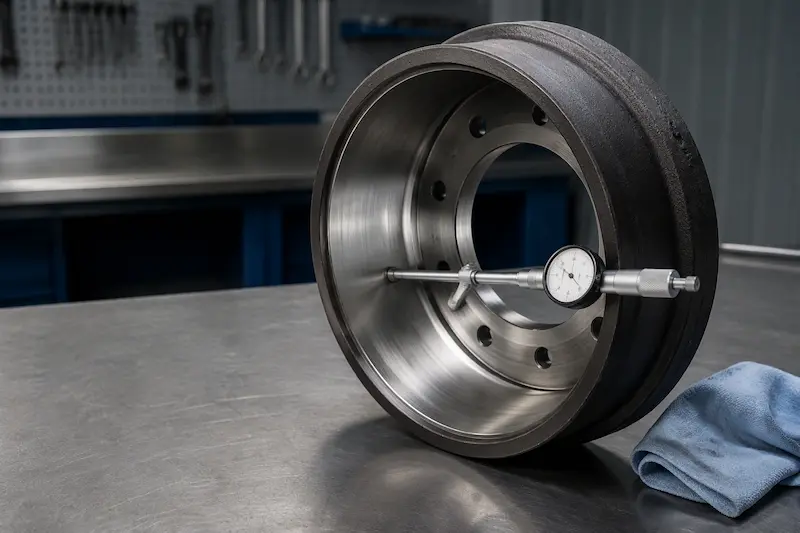
Manufacturing precision: A brake drum machined to tight runout tolerances wears evenly instead of developing thin spots. An axle spindle with a properly ground bearing journal prevents premature bearing failure. Manufacturing precision directly translates to product longevity.
Corrosion protection: Trailers operate in the harshest environments — road salt, saltwater boat ramps, mud, snow, and rain. A brake drum with a quality corrosion-resistant coating lasts years longer than an uncoated drum. Our earlier guide to hydraulic vs. electric brakes for boat trailers details how saltwater corrosion attacks brake components and what protective measures work.
The Environmental Math of Longer-Lasting Parts
Consider a fleet of 100 trailers, each with four brake drums. If those drums last 5 years instead of 3, the fleet avoids replacing 400 brake drums in years 4 and 5. Those 400 avoided replacements save:
- The raw iron ore and energy for casting 400 new drums
- The machining hours and cutting tool consumption for finishing 400 drums
- The packaging, shipping, and distribution for 400 drums
- The disposal or recycling logistics for 400 worn-out drums
Durability is the multiplier that amplifies every other sustainability effort in the manufacturing process.
Eco-Friendly Coatings and Surface Treatments
Traditionally, metal parts received corrosion protection through solvent-based paints and coatings that release volatile organic compounds (VOCs) during application and curing. Modern alternatives reduce this environmental impact without sacrificing protection.
Water-based coatings replace petroleum solvents with water as the carrier medium. They emit far fewer VOCs, pose less health risk to workers, and still provide effective corrosion protection when formulated correctly for the application.
Powder coating applies dry powder electrostatically to the part surface, then cures it in an oven. Unlike liquid paint, powder coating contains no solvents and produces virtually zero VOCs. Overspray powder recovers and reuses, so material waste approaches zero. Many trailer jack and bracket components now ship with powder-coated finishes that outlast traditional wet paint.
Thermal spray coatings apply molten metal or ceramic material to part surfaces using a high-temperature spray gun. These coatings provide extreme wear and corrosion resistance for high-stress components without the chemical baths required for traditional electroplating. Axle spindles with thermal-sprayed bearing journals last significantly longer in abrasive environments.
What Sustainable Manufacturing Means for Buyers
When you evaluate trailer parts suppliers, sustainability practices affect your purchasing decision in practical ways:
Lower Total Cost of Ownership
A part that costs 10% more upfront but lasts 40% longer costs less per mile of service. Sustainable manufacturing practices — better materials, tighter tolerances, better coatings — produce parts with longer service lives. The purchase price tells only part of the story.
Supply Chain Reliability
Manufacturers that invest in energy efficiency and waste reduction tend to run leaner, more disciplined operations. They monitor metrics, track performance, and identify problems before they cause production disruptions. A supplier with strong operational discipline delivers more consistent quality and more reliable lead times.
Compliance and Market Access
Distributors selling into the European Union, Australia, and New Zealand increasingly face requirements to document their supply chain’s environmental practices. Partnering with a manufacturer that can provide material certifications, recycling documentation, and process descriptions simplifies compliance for downstream customers.
Brand Value
Your customers increasingly care where their parts come from. A trailer dealer that can explain why its brake drums contain recycled steel and come from an energy-efficient factory differentiates itself from competitors selling generic parts with no transparency about origin or manufacturing practices.
Looking Forward: Trends Shaping Sustainable Trailer Parts Manufacturing
The sustainability landscape continues to evolve. Several emerging trends will shape trailer parts manufacturing over the next decade:
Increased recycled content mandates: Regulators in the EU already require minimum recycled content percentages in certain automotive components. These requirements will likely expand to include commercial vehicle and trailer parts over time.
Digital product passports: Future regulations may require every manufactured component to carry a digital record of its material composition, manufacturing energy consumption, and recyclability. Manufacturers that build traceability systems now will adapt more easily when these requirements arrive.
Material innovation: Lightweight steel alloys and aluminum composites reduce trailer weight, which directly improves towing fuel economy. A 10% reduction in trailer weight translates to measurable fuel savings over hundreds of thousands of towing miles.
Renewable energy in manufacturing: As solar and wind power costs continue to fall, more factories will power stamping presses and machining centers with on-site or grid-connected renewable electricity. A part stamped with solar power carries a fundamentally different carbon footprint than one stamped with coal-fired electricity.
Frequently Asked Questions (FAQ)
Are recycled steel trailer parts as strong as parts made from virgin steel?
Yes. Steel recycles without degradation — the atomic structure remains identical regardless of how many times the material cycles through the recycling process. A brake drum cast from 100% recycled steel performs identically to one cast from virgin iron ore, provided both meet the same alloy composition and heat treatment specifications. The recycling process involves remelting, which resets the material’s properties completely.
Does sustainable manufacturing increase the cost of trailer parts?
Not necessarily. Many sustainability practices — reducing scrap, improving energy efficiency, minimizing rework — directly lower production costs. A manufacturer running an optimized stamping operation with high material yield and efficient modern equipment can produce parts at competitive or lower cost than a less efficient competitor. The savings from waste reduction and energy efficiency often offset any premium for better materials or coatings.
How can I verify that a manufacturer actually follows sustainable practices?
Request documentation. A credible manufacturer can provide material certifications showing recycled content, process descriptions of its scrap management and recycling programs, and if applicable, third-party certifications such as ISO 14001 (environmental management) or ISO 50001 (energy management). Factory audit reports and quality management system documentation also contain environmental performance data. Be skeptical of vague marketing claims without supporting evidence.
What happens to trailer brake components at the end of their life?
Ferrous metal components — brake drums, backing plates, axle beams, hubs — all qualify for standard scrap metal recycling. Remove non-metal components (brake shoe linings, wiring, rubber seals) before delivering the metal to a scrap yard. Most scrap metal processors accept complete brake drums and axle assemblies as long as the majority of the weight is recyclable steel or iron. Many scrap yards pay for steel by weight, so end-of-life components carry residual value.
Can aluminum trailer components replace steel ones for sustainability?
Aluminum offers a significant weight advantage — roughly one-third the density of steel — which improves fuel economy during towing. However, aluminum also costs more, requires different manufacturing processes, and does not match steel’s fatigue strength in high-stress applications like axle beams. The sustainability equation for aluminum vs. steel depends on the specific application: aluminum makes sense for non-structural brackets and housings, while steel remains the better choice for axles, brake drums, and heavy load-bearing components. The best sustainability outcome often comes from using the right material for each job rather than defaulting to one or the other.
How does shipping distance affect the sustainability of imported trailer parts?
Ocean freight emits far less CO₂ per ton-mile than truck or air freight. A container of brake drums shipped from a Chinese port to Los Angeles or Sydney produces a fraction of the emissions per part compared to trucking individual pallets across a continent. However, shipping distance still matters. A sustainably manufactured part shipped efficiently across an ocean may carry a smaller total carbon footprint than a less efficiently manufactured part produced domestically. The only way to make a fair comparison is to evaluate the full lifecycle — raw material extraction, manufacturing, shipping, service life, and end-of-life recycling — not just the transportation segment in isolation.
Better Parts Start with Better Manufacturing
Sustainability in trailer parts manufacturing does not mean compromising performance or paying a premium. It means using materials efficiently, running equipment intelligently, and building parts that last. These practices produce better components — tighter tolerances, longer service lives, lower total cost of ownership — while reducing environmental impact.
When you choose parts from a manufacturer that tracks material yield, captures and recycles its scrap, maintains modern energy-efficient equipment, and coats its products for maximum corrosion resistance, you receive a better part. The sustainability is a byproduct of the quality.
At Weifang Top Trailer Accessories, our stamping and machining workshops operate with these principles every day. We supply brake assemblies, brake drums, axles and axle parts, jockey wheels, and other trailer components to customers across the United States, Canada, Australia, and New Zealand.
Contact our team to discuss your product requirements, request material certifications, or learn more about our manufacturing processes. Browse our complete product range online.