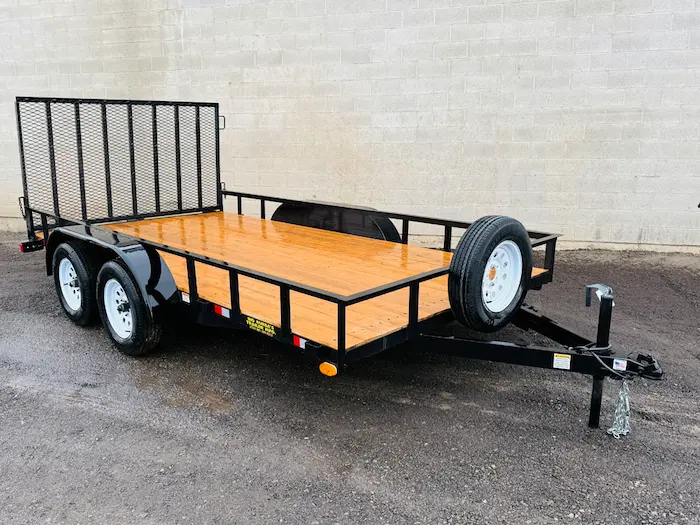
Whether you need a trailer for work or leisure, a tandem axle trailer will help you get the job done right. These trailers consist of two sets of axles situated close to each other, designed to evenly distribute the weight of the cargo you’re hauling. Many people favor this type of trailer for its stability and load-bearing capabilities.
In this comprehensive guide, we’ll delve into how these trailers work, their applications and the advantages of owning one.
What Does Tandem Axle Mean?
A tandem axle is a trailer configuration featuring two axles positioned close together and connected through a shared suspension system. With one axle placed directly behind the other, this setup balances weight more evenly. Tandem axle trailers — also called dual-axle or two-axle trailers — distribute heavy loads across four wheels instead of two, offering smoother towing, improved handling and greater stability than single-axle options.
How Does a Tandem Axle Trailer Work?
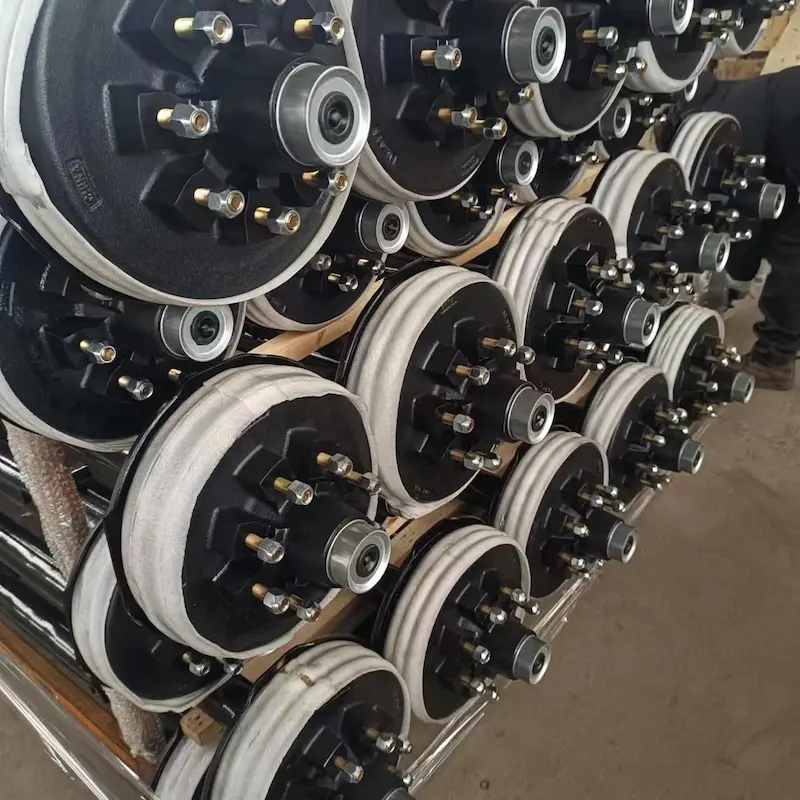
A tandem axle trailer works through shared load distribution. Each axle has its own wheels and tires, and together they support the trailer’s total weight. The number and type of axles determine towing capacity and overall performance.
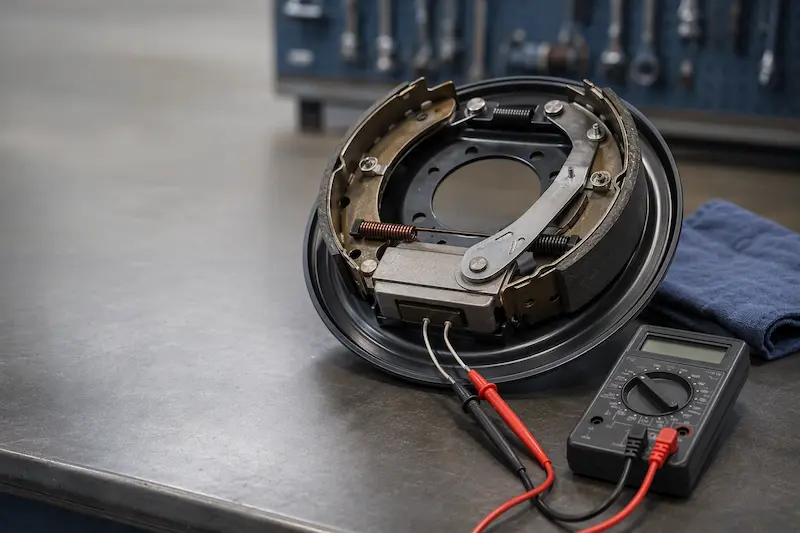
Key components include the axle set, suspension system and dual-brake setup, each contributing to stability, shock absorption and stopping power. Equalizing suspension systems in some models further improve safety and ride comfort.
How Much Does a Tandem Axle Trailer Weigh?
Most empty tandem axle trailers weigh 1,500 to 4,000 pounds, depending on material, size and design features. Custom-built models may fall above or below this range. Knowing the exact weight is essential for matching tow vehicle capacity and complying with regulations.
How Much Can a Tandem Axle Trailer Carry?
Typical tandem axle trailers carry 7,000 to 12,000 pounds, depending on construction. To calculate actual capacity, subtract the trailer’s empty weight from its Gross Vehicle Weight Rating (GVWR).
🌟 Table 1: Typical Weight & Capacity Ranges
| Trailer Specification | Typical Range |
|---|---|
| Empty Weight | 1,500–4,000 lbs |
| Gross Vehicle Weight Rating (GVWR) | 7,000–12,000 lbs |
| Typical Payload Capacity | 5,000–8,000 lbs (depending on GVWR minus empty weight) |
| Number of Tires | 4 |
| Brake System | Usually brakes on both axles |
How to Jack Up a Tandem Axle Trailer
Jacking up a tandem axle trailer requires proper tools and safety steps:
-
Gather tools such as a tire ramp, lug wrench, breaker bar, tire gauge and spare tire.
-
Park on level ground to prevent sliding.
-
Position the ramp and chock opposite wheels.
-
Lift the trailer using a jack placed on a solid frame point.
-
Replace the tire and lower the trailer safely.
For safety, work with a partner and remain aware of surroundings.
Advantages of Tandem Axle Trailers
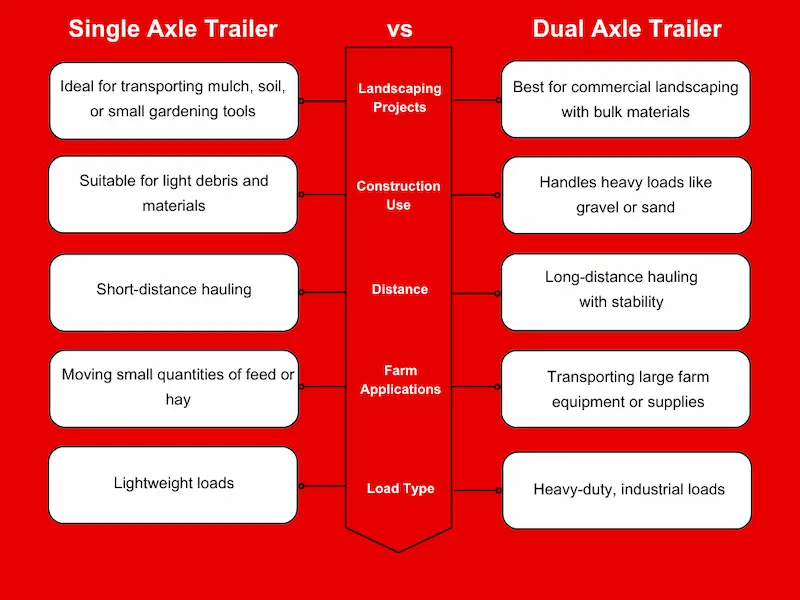
Tandem axle trailers provide multiple benefits, including improved stability, easier maneuverability, increased load capacity, better braking, fewer tire issues, versatile use and higher resale value. Their dual-axle system distributes weight efficiently, reduces sway and enhances performance in various driving conditions.
Tandem axle trailers offer various advantages, making them a preferred choice for casual and professional users. Here are some of the key benefits:
Enhanced Stability and Safety
With its additional axle design, these trailers offer better stability, especially at high speeds, reducing the risk of swaying and offering a smoother ride. With four tires on the ground and an enhanced suspension system, the trailer is safer for you and your passengers, providing better traction on slippery roads and even in the roughest weather conditions. Some people add sway control units to increase steadiness in windy areas and to protect cargo from excessive movement.
Easier Maneuverability
Tandem-axle trailers offer better maneuverability than single-axle trailers. Once you’re accustomed to the trailer’s size, navigating turns is much smoother with two axles. Their stability makes them easier to control on highways, with their wider turning radius reducing sway and offering swift transitions when turning. You’ll also have an easier time traversing uneven terrain, as the multiple axles provide better weight distribution, leading to improved traveling over bumps and dips.
Increased Load Capacity
Tandem axle trailers are designed to handle heavier loads than other trailers, making them ideal for hauling larger and bulkier items.
The increased weight capacity makes tandem axle trailers a good fit for commercial hauling, heavy equipment transport and extensive travel when carrying heavier cargo.
Better Weight Distribution
With two axles, tandem axle trailers spread weight more effectively over a larger area, ensuring a more balanced load. Even weight distribution places less stress on road surfaces, reducing road wear and minimizing the impact on the trailer’s tires and suspension components.
Better weight distribution can lead to lower maintenance costs and extended service life.
Improved Braking
Tandem axle trailers typically feature brakes on both axles, leading to superior stopping power, which is critical when transporting heavy loads. Improved braking also contributes to safety by reducing stopping distances and offering greater control when slowing down.
Fewer Tire Issues
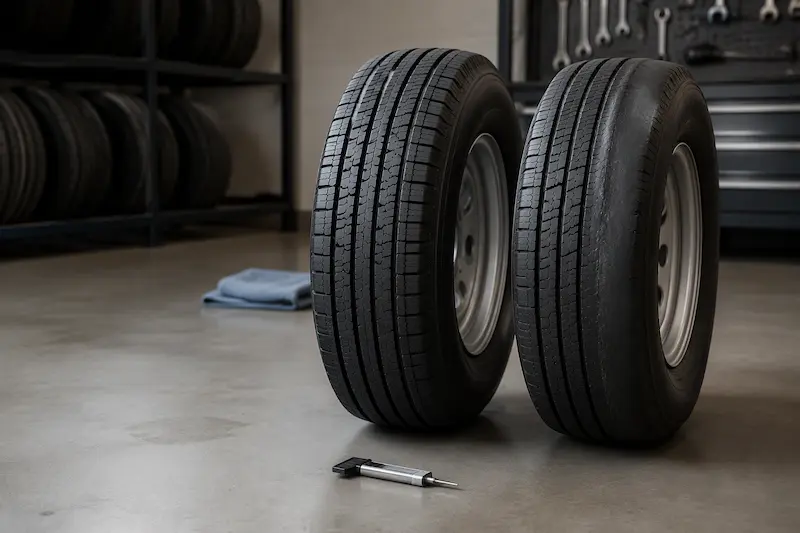
With four tires on the ground rather than two, you get an extra layer of security in case one tire fails. Dual-axle trailers are also easy to change in the case of a blowout.
While a flat or blowout can be hazardous for any vehicle, having multiple tires on each side offers redundancy that allows you to safely pull over and address the issue. You might not even feel the effect of one flat tire.
Versatile Uses
Tandem axle trailers are highly versatile, offering a more efficient towing experience and making them a valuable asset for commercial or recreational use. Various industries, from construction to retail, leverage these trailers for hauling everything from raw materials to bulky furniture to heavy equipment.
Individuals can also leverage tandem axle trailers for diverse hauling needs, like moving boxes to a new house or hauling gear for a weekend getaway.
Resale Value
Due to their durability and versatility, tandem axle trailers typically retain their value better than others. They can handle heavier loads and offer better stability, making them attractive to a broader range of potential buyers in both commercial and recreational markets.
Applications and Common Uses
Tandem axle trailers are widely used across commercial, agricultural, recreational, construction and landscaping industries. They transport everything from retail goods and heavy equipment to livestock, off-road vehicles and camping supplies.
How to Choose a Tandem Axle Trailer
Key considerations include cargo weight, hauling frequency, trailer material (steel vs. aluminum), add-ons like ramps or enclosed sides and deciding between new or used options.
🌟 Table 2: Steel vs. Aluminum Trailer Material Comparison
| Feature | Steel Trailer | Aluminum Trailer |
|---|---|---|
| Weight | Heavier | Lighter |
| Durability | Very strong | Strong but lighter |
| Corrosion Resistance | Can rust without maintenance | Excellent rust resistance |
| Maintenance | Requires more upkeep | Low maintenance |
| Cost | Usually cheaper | More expensive upfront |
Contact Us
Tandem Axle Trailers are essential vehicle components for many tasks and industries — commercial or recreational. Weifang Top is an award-winning dealer and a one-stop shop for all your trailer needs.
Our expert team will help you find the right trailer options, and we’ll inspect, customize and deliver it straight to you.
Our vast inventory ensures you can find a trailer that fits your requirements, application and budget. Browse our high-quality trailers or contact us to learn about our products and services.
For more details on installation and specifications, visit our official product page or contact our technical support team for personalized assistance.