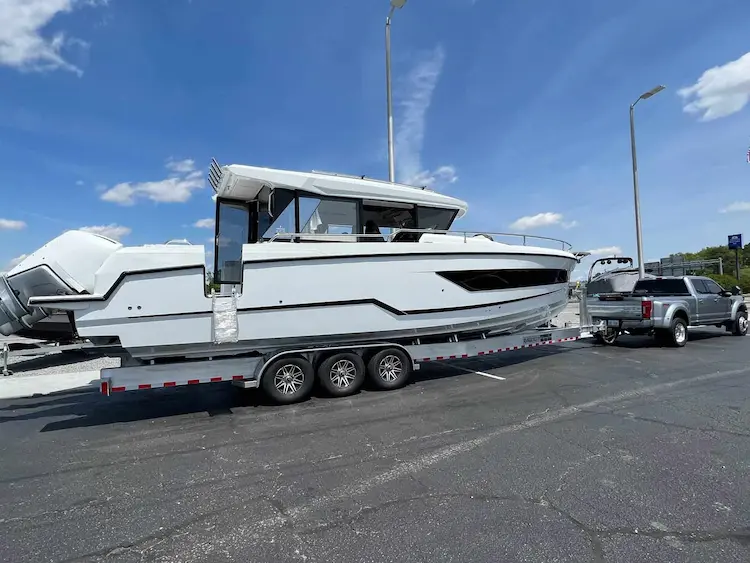
Professional Guide for Marine Industry, Importers, and Trailer Manufacturers
Importing a boat trailer into the United States requires strict compliance with federal safety standards, maritime equipment regulations, customs procedures, and state registration rules. Compared with general utility or cargo trailers, boat trailers face additional technical requirements related to corrosion resistance, waterproof lighting, brake system standards, and marine environmental rules.
This guide breaks down the full import qualification requirements, documents, inspections, and licensing steps to help importers successfully bring a boat trailer into the U.S. market.
1. Federal Qualification Requirements for Boat Trailer Imports
Before shipment, confirm the boat trailer meets U.S. federal safety regulations, primarily:
1.1 Federal Motor Vehicle Safety Standards (FMVSS)
Boat trailers must comply with applicable FMVSS standards administered by the National Highway Traffic Safety Administration (NHTSA).
Key sections affecting boat trailers:
-
FMVSS 108 – Lamps, Reflective Devices & Electrical Lighting
Boat trailers must use sealed, waterproof marine-grade lights and DOT-approved reflectors. -
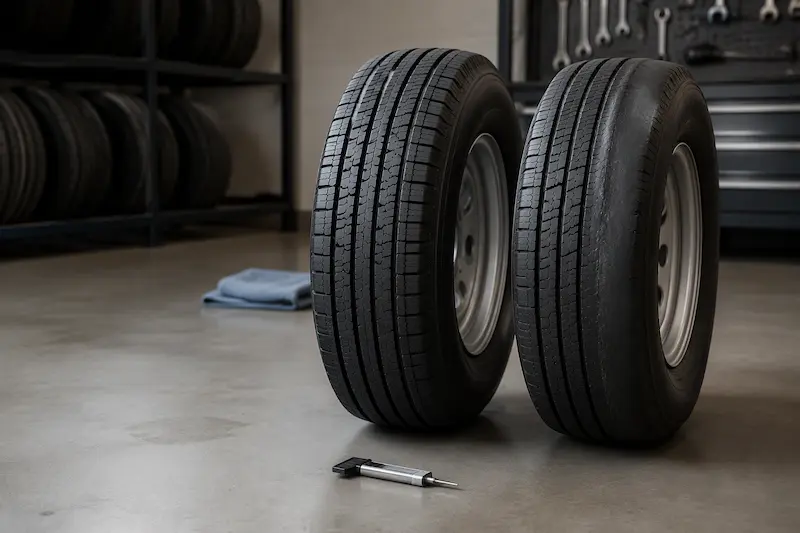
FMVSS 119 / 139 – Tire Safety Standards
Tires must carry DOT certification, proper load ratings, and manufacturing codes. -
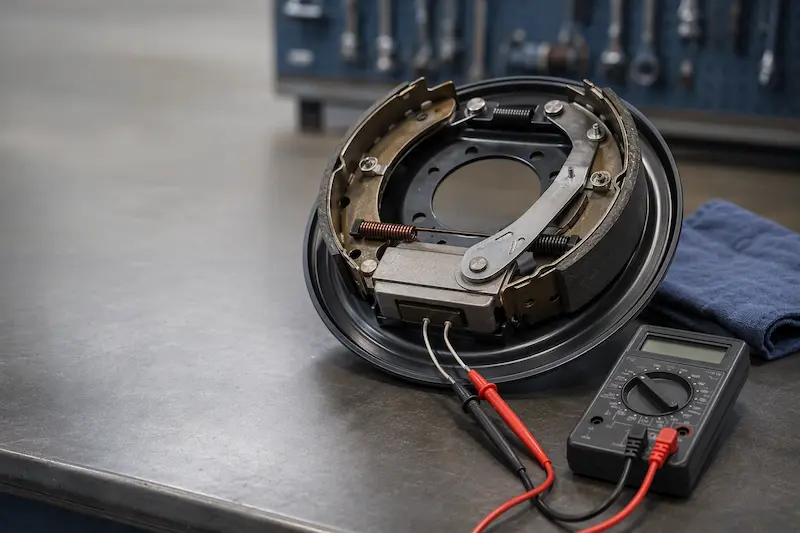
FMVSS 121 / 571.105 – Brake System Requirements
Most states require brakes on trailers over 3,000 lbs; some U.S. states require brakes on ALL axles.
Boat trailers must also include:
-
DOT-compliant VIN
-
Manufacturer’s certification label
-
Proper weight ratings (GVWR, GAWR)
Official reference:
NHTSA FMVSS Standards – https://www.nhtsa.gov/laws-regulations/federal-motor-vehicle-safety-standards
1.2 EPA Regulations (If Applicable)
Boat trailers without engines or fuel systems are generally not subject to EPA engine rules.
However, if importing:
-
electric-powered winches
-
engine-driven hydraulic systems
documentation may be required.
Official reference:
U.S. Environmental Protection Agency (EPA) – https://www.epa.gov
1.3 U.S. Coast Guard Maritime Safety Considerations (Indirect)
While the boat trailer itself is not a vessel, the U.S. Coast Guard indirectly influences requirements for:
-
trailer lighting visibility
-
towing safety for boat launching ramps
-
corrosion-resistant electrical standards
Official reference:
U.S. Coast Guard – https://www.uscg.mil
2. Import Documentation Required by U.S. Customs
To import a boat trailer, you must prepare the following documents before arrival:
Required Documents
1)Bill of Lading (BOL)
2)Commercial Invoice (value, model, VIN, country of origin)
3)Packing List
4)Manufacturer’s Certificate of Origin (MCO) or Title
5)FMVSS Compliance Letter or Label
6)CBP Entry Summary – Form 7501
7)EPA Form 3520-1 (if applicable)
U.S. Customs and Border Protection (CBP):
https://www.cbp.gov
3. Customs Clearance & Import Duties
Boat trailers typically fall under:
HTS Code: 8716.39 – Other Trailers and Semi-Trailers
Typical duty rate: 0%–3.2% depending on materials and origin.
Additional CBP procedures:
-
VIN verification
-
Random physical inspection
-
Port security check
Customs brokers are highly recommended for first-time importers.
4. Technical Requirements Unique to Boat Trailers
Boat trailers have design characteristics not found in standard utility trailers:
4.1 Waterproof Marine Lighting
Must meet FMVSS 108 requirements:
-
Sealed LED submersible lights
-
DOT-marked reflectors
-
Corrosion-proof wiring & connectors
4.2 Brake Requirements
Depending on state:
-
Surge brakes or electric-over-hydraulic brakes
-
Multi-axle trailers require brakes on all axles
4.3 Corrosion-Resistant Materials
Boat trailers may require:
-
Hot-dipped galvanized frames
-
Aluminum I-beam construction
-
Stainless steel hardware
4.4 Trailer Bunks & Rollers
Must be adjustable and rated to support watercraft weight.
5. State-Level Registration & Licensing
After clearing customs, each state requires individual trailer registration:
General Registration Steps
-
Submit title or Manufacturer’s Certificate of Origin
-
Provide proof of customs release
-
Present VIN for inspection (some states require physical check)
-
Pay registration & plate fees
-
Purchase liability insurance (varies by state)
Marine-Specific Requirements (Common in coastal states)
-
Saltwater-use trailer inspections
-
Brake system testing for downhill ramps
-
Annual safety inspection (e.g., CA, MA, NY, NC)
Find your state DMV here:
https://www.usa.gov/motor-vehicle-services
6. Shipping Methods for Boat Trailers
Best Option: Roll-On / Roll-Off (RoRo)
Boat trailers are rolled onto the vessel. Ideal for large and heavy units.
Container Shipping
For smaller or single-axle trailers that can fit inside a 20ft or 40ft container.
Lift-On / Lift-Off (LoLo)
Used when trailer cannot roll; cranes lift the trailer.
7. Compliance Risks to Avoid
| No FMVSS-compliant lighting No DOT-certified tires Missing VIN or non-U.S. VIN format Using non-marine electrical components Brake system not compliant with destination state |
These issues may cause CBP refusal, costly rework, or confiscation.
8. Official U.S. Government Resources (Direct Links)
Below are authoritative reference websites for import qualification:
U.S. Customs & Border Protection (CBP) – Import Rules
https://www.cbp.gov/trade/basic-import-export
NHTSA FMVSS Trailer Safety Standards
https://www.nhtsa.gov/laws-regulations/federal-motor-vehicle-safety-standards
EPA Import Regulations
https://www.epa.gov/importing-vehicles-and-engines
U.S. Coast Guard Safety Requirements
State DMV Trailer Registration Directory
https://www.usa.gov/motor-vehicle-services
Conclusion
Importing a boat trailer into the United States is entirely achievable when you understand the federal safety standards, marine-specific technical requirements, customs documentation, and state-level licensing rules.
By ensuring compliance with FMVSS, verifying corrosion-resistant marine components, preparing accurate customs documents, and registering properly with your state’s DMV, you can confidently and legally operate a boat trailer in the U.S.
Contact Us
Trailer Axles are essential vehicle components for many tasks and industries — commercial or recreational. Weifang Top is an award-winning dealer and a one-stop shop for all your trailer needs.
Our expert team will help you find the right trailer options, and we’ll inspect, customize and deliver it straight to you.
Our vast inventory ensures you can find a trailer that fits your requirements, application and budget. Browse our high-quality trailers or contact us to learn about our products and services.
For more details on installation and specifications, visit our official product page or contact our technical support team for personalized assistance.